 SENJIE Healthy & Technology
SENJIE Healthy & Technology
SENJIE Healthy & Technology
Choosing the Best Bending Tools from China for Global Buyers? It sounds simple, but the decision requires careful evidence. Chinese manufacturers supply manual benders, hydraulic machines, CNC press brakes, and compact tube tools. Each option serves different materials, thicknesses, production volumes, and budgets. A workshop shaping stainless steel tubing needs different control than a contractor bending copper pipe on site. Small details matter. Handle design, die accuracy, frame rigidity, and return speed can affect daily results. This guide examines those practical differences.
Real purchasing experience shows that supplier communication can influence performance as much as the machine itself. Buyers should request material specifications, bending capacity data, sample videos, maintenance instructions, and clear warranty terms. Factory visits, third-party inspections, and trial orders can reveal weaknesses hidden in product photographs. Verified testing helps, too. Product requirements differ across markets, so buyers should confirm applicable safety and electrical standards with qualified professionals. Reliable suppliers explain limitations instead of promising everything.
No tool is perfect. A low-cost machine may reduce the initial budget, yet require more manual adjustment and maintenance. A premium CNC model may improve repeatability, but remain unnecessary for occasional work. Some recommendations may need adjustment after real testing. That is normal. The best Bending Tools should match the buyer’s materials, workload, operator skills, service expectations, and long-term costs. Careful comparison creates fewer surprises after delivery. Real value appears during daily use, not only on an attractive quotation.
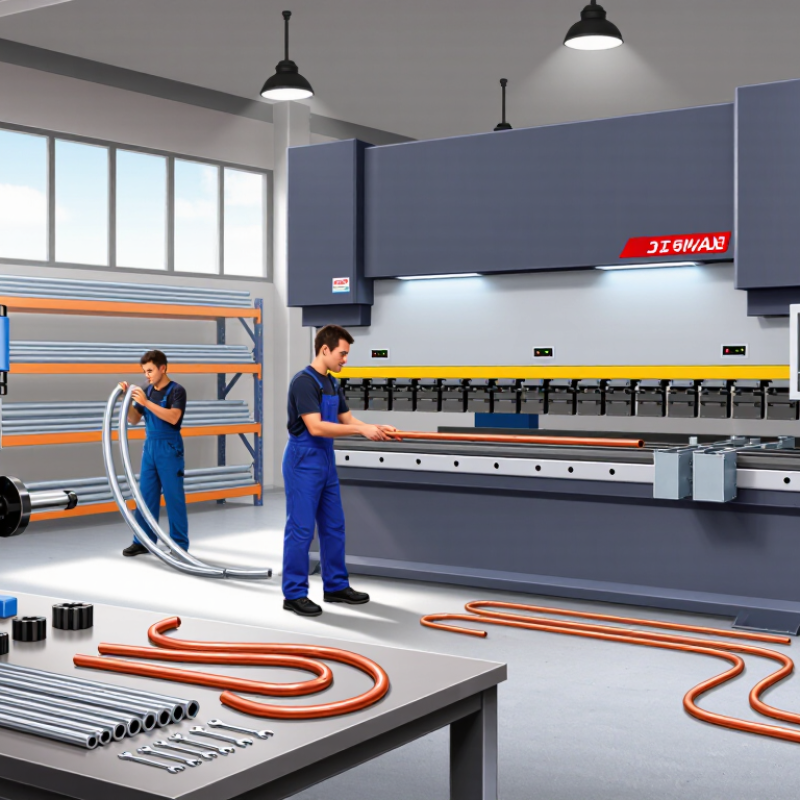
Press brakes are the main choice for accurate sheet-metal forming. They bend plates along straight lines using a punch and die. For global buyers, hydraulic models offer strong force and stable performance on thicker steel. Electric or hybrid designs can reduce energy use and improve repeatability. Check the working length, maximum thickness, backgauge accuracy, and control interface. A 3,000 mm bed may sound impressive, but it is useless if your workshop cannot support long sheets safely.
Tube benders handle round, square, and rectangular profiles. Rotary-draw machines suit clean bends with controlled radius and limited flattening. Roll benders are better for repeated curves, frames, and large-radius work. Ask for sample bends using your actual tube size, wall thickness, and material grade. Small differences matter. A bend that looks acceptable by eye may fail a dimensional inspection. Tooling changes also affect setup time, so confirm whether mandrels, clamps, and dies are included.
Section rolls shape angle iron, channels, flat bars, and structural profiles. Three-roll systems provide flexible adjustment, while powered models improve production consistency. Before purchasing, review roll diameters, maximum section size, drive capacity, and calibration procedures. Request videos, test reports, drawings, and spare-parts details. Certification documents should match the delivered machine, not just a sales file. I have seen buyers focus on purchase price and overlook training, packaging, or voltage compatibility. That mistake becomes expensive after installation. Even good equipment may need careful alignment and operator practice.
| Bending Tool Type | Typical Workpiece | Common Capacity Range | Typical Materials | Main Bending Method | Best-Fit Applications | Important Buying Specifications | Global Buyer Notes |
|---|---|---|---|---|---|---|---|
| Hydraulic Press Brake | Flat sheet and plate | Approximately 40–3,000 tonnes; working length commonly 1,250–8,000 mm | Carbon steel, stainless steel, aluminum, galvanized sheet | Punch-and-die forming through controlled ram force | Enclosures, brackets, cabinets, structural components, HVAC parts | Nominal force, bending length, daylight, stroke, throat depth, back-gauge axes, controller, tooling system | Confirm electrical standards, hydraulic component specifications, safety guarding, spare parts, and operator training requirements. |
| Mechanical Press Brake | Thin and medium-gauge sheet metal | Approximately 25–250 tonnes; working length commonly below 4,000 mm | Carbon steel, aluminum, stainless steel in suitable thicknesses | Mechanical flywheel and crank mechanism | High-repeatability production of relatively light sheet-metal parts | Rated tonnage, stroke, working length, speed, tooling compatibility, clutch and brake design | Often selected for straightforward production work; verify guarding, noise limits, and the availability of maintenance components. |
| CNC Press Brake | Complex sheet-metal parts requiring multiple bends | Approximately 40–1,000 tonnes; 2–8 controlled axes are common | Carbon steel, stainless steel, aluminum, copper alloys | Programmable hydraulic or electric ram with CNC back-gauge positioning | Short-run production, precision components, job shops, export-oriented fabrication | Axis configuration, repeatability, angle measurement, crowning, offline programming, software language, bend allowance control | Request a sample-bending test and confirm software support, remote diagnostics, documentation language, and controller availability in the destination market. |
| CNC Tube Bender | Round, square, rectangular, and oval tubing | Round-tube outside diameter commonly 6–220 mm; wall thickness depends on material and radius | Carbon steel, stainless steel, aluminum, copper, brass | Rotary-draw, roll, or push bending with programmable feed and rotation | Automotive components, furniture frames, exhaust systems, handrails, heat-exchanger tubing | Maximum outside diameter, centerline radius, mandrel capability, boost bending, number of axes, tube-length limit | Provide exact tube dimensions, material grade, minimum radius, bend sequence, and required surface quality before selecting tooling. |
| Hydraulic Tube Bender | Medium- and large-diameter pipes and tubes | Commonly 20–159 mm outside diameter; larger custom configurations are available | Carbon steel, stainless steel, galvanized pipe, selected alloy tubing | Hydraulic ram-assisted rotary or push bending | Pipelines, construction equipment, boilers, shipbuilding, structural pipework | Maximum pipe diameter, bending angle, radius range, motor power, die set, clamping method, hydraulic pressure | Check whether dies are included, whether pipe standards match the project, and whether the machine can operate continuously at the requested load. |
| Three-Roll Section Bender | Angles, channels, flats, beams, pipes, and structural profiles | Profile sizes range from small sections to heavy structural sections; capacity is defined by section modulus and roll diameter | Carbon steel, stainless steel, aluminum, copper alloys | Progressive rolling between three adjustable rolls | Arches, rings, frames, guardrails, structural curves, architectural metalwork | Maximum section dimensions, roll diameter, shaft diameter, center distance, pre-bending capability, lateral guides, drive power | Send profile drawings and target inside or centerline radius; section capacity cannot be judged from roll diameter alone. |
| Four-Roll Plate Bender | Flat plate and heavy sheet for cylindrical or conical shells | Plate thickness commonly 4–100 mm; useful width often 1,500–6,000 mm | Carbon steel, stainless steel, aluminum, high-strength plate | Four-roll controlled forming with reduced repositioning | Tanks, ducts, pressure-vessel shells, towers, large welded cylinders | Maximum thickness and width, minimum diameter, roll diameter, pre-bending length, cone-bending capability, plate yield strength | Specify material yield strength and plate condition; rated capacity changes substantially with width, diameter, and material strength. |
| Manual or Portable Tube Bender | Small tubes, conduit, and thin-wall pipe | Typically 6–50 mm outside diameter, depending on the tool design | Copper, aluminum, thin-wall steel, stainless steel conduit | Lever, ratchet, hydraulic hand pump, or compact electric drive | Field installation, plumbing, refrigeration, electrical conduit, maintenance work | Tube diameter, wall thickness, allowable bend radius, included formers, portability, calibration marks | A practical option for low-volume work; verify dimensional compatibility because interchangeable dies are not universal. |
Choose a press brake for straight sheet bends. Use a tube bender for controlled profile curves. Select section rolls for angles, channels, and large-radius frames. The job decides.
Check tonnage, working length, maximum thickness, backgauge accuracy, and control interface. A 3,000 mm bed needs safe floor space and sheet handling. Bigger is not always better.
Request sample bends using your actual tube size, wall thickness, and material grade. Inspect radius, flattening, and dimensional accuracy. A visually acceptable bend may fail inspection. Confirm mandrels, clamps, and dies are included.
Review roll diameters, maximum section size, drive capacity, adjustment range, and calibration procedures. Three-roll systems offer flexible adjustment. Powered models can improve repeatability. Ask for drawings and spare-parts details.
Consider tensile strength, material thickness, bend length, and die opening. Stainless steel usually needs more force than mild steel. Avoid undersizing the machine. Excessive tonnage can damage tooling.
A narrow die can create a tighter radius, but marking and cracking risks increase. Material grain direction and batch differences affect results. Test the actual material. They matter.
Request measured sample parts from several positions. Testing should use calibrated equipment and a warmed machine. Repeat at least 20 bends. Temperature changes may affect results. Controller claims are not enough.
Request quality certificates, validity dates, covered activities, inspection records, calibration dates, drawings, test reports, and traceability details. Verify documents match the delivered machine. Paperwork can still hide inconsistency.
Confirm voltage compatibility, packaging, training, maintenance instructions, spare parts, and safe operating limits. Test surface finish, repeatability, tool life, and springback. I might overlook training too. That mistake gets expensive.
Choosing the best Bending Tools from China requires a clear understanding of equipment types, performance metrics, compliance, automation, and supplier reliability. Press brakes are suitable for sheet metal forming, tube benders handle precise pipe work, and section rolls shape structural profiles. Buyers should compare tonnage, maximum thickness, minimum bend radius, working length, and achievable accuracy, with ±0.1 mm as a useful benchmark for demanding applications.
Reliable suppliers should demonstrate ISO 9001 and CE compliance, along with alignment with GB/T 19001 quality requirements. CNC control, four to six controlled axes, and energy-efficient systems can improve repeatability, productivity, and operating costs. Before placing an order, buyers should request trials using three representative samples, conduct a Factory Acceptance Test, and confirm warranty coverage, technical support, documentation, and spare-parts availability. A structured evaluation helps ensure the selected equipment matches production needs and delivers stable long-term value.
