SENJIE Healthy & Technology
Choosing Surgical Screwdrivers for global markets requires more than comparing prices or counting available tip sizes. Buyers must examine the complete working environment: implant design, screw recess, torque limits, sterilization method, packaging, and service support. A driver may fit perfectly on the first day, yet fail after repeated cleaning cycles. Small details matter. Grip texture matters. Tip hardness matters. Even the sound of engagement can reveal poor alignment.
Orthopaedic surgeon and former American Academy of Orthopaedic Surgeons president Dr. Joshua J. Jacobs offers a useful principle: “Instrument choice should support accurate, reproducible fixation.” That idea should guide every purchasing decision. Surgical Screwdrivers need stable interfaces, controlled torque, visible markings, and dependable compatibility with the selected screw system. Global buyers should request dimensional drawings, material information, validation records, and clear instructions for use. They should also confirm whether local teams can obtain replacement parts and technical training.
Do not trust appearance alone.
A polished handle proves very little. A driver that feels comfortable may still transfer uneven torque. Some buyers focus heavily on unit cost, then discover higher expenses through damaged tips, delays, or inconsistent assembly. That is a practical weakness worth admitting. No selection process is perfect. However, documented testing, surgeon feedback, and supplier transparency can reduce avoidable uncertainty. The strongest choice is usually not the cheapest Surgical Screwdrivers set, but the one that performs consistently across users, facilities, and repeated clinical workflows.
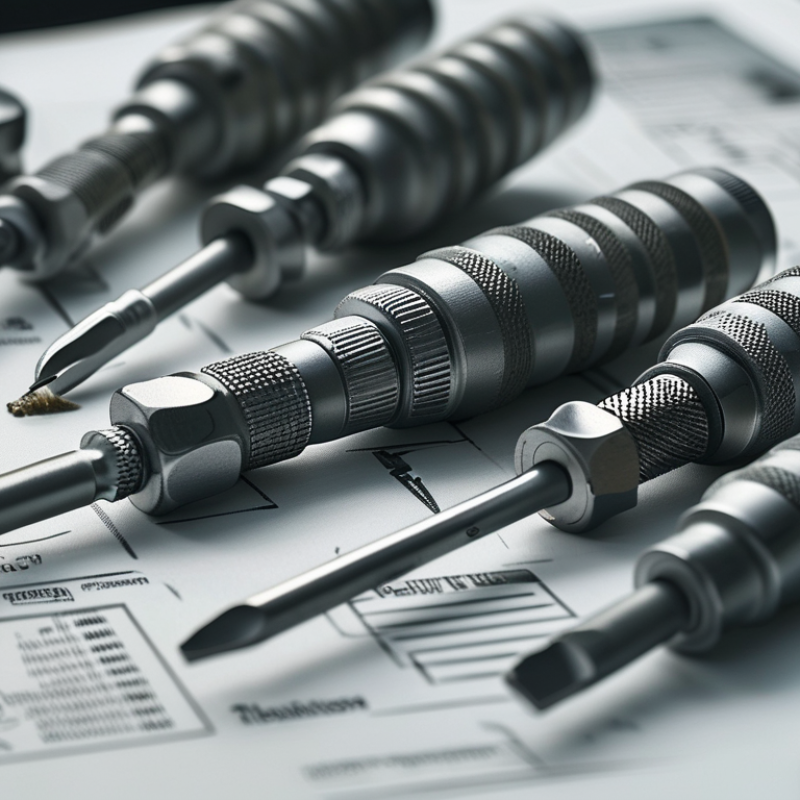
How to Choose Surgical Screwdrivers for Global Buyers
Define the Surgical Task and Screw Interface Using ASTM F543-23
Selecting a surgical screwdriver starts with the procedure, not the catalogue image. Fixation depth, access angle, and expected insertion torque shape the choice. ASTM F543-23 provides a recognized framework for evaluating metallic bone screws and their mechanical performance. It does not select a screwdriver for every application. Buyers must match the driver to the screw’s recess, geometry, and intended use.
Check full interface engagement before approving a tool. A driver should seat deeply without rocking or damaging the recess. Compare tip dimensions with controlled samples, not photographs. Consider torque limits, handle control, sterilization exposure, and compatibility with powered equipment. Testing should include insertion and removal simulations under representative conditions. Small differences in recess depth can change performance. That detail is easy to miss.
Tips: Request dimensional drawings, material data, and test records. Inspect several production samples. Confirm fit at working angles. Document acceptance criteria for each market. ASTM alignment supports consistent evaluation, but local regulatory review remains necessary. A carefully matched driver can still fail when the user applies a tilted load. This is where many purchasing decisions need honest review. Over-specifying strength may reduce handling comfort, while a comfortable handle may hide poor torque transfer. Reassess the complete system before final approval.
How to Choose Surgical Screwdrivers for Global Buyers
Match Drive Geometry, Tip Size, and Torque to the Manufacturer’s IFU
Selecting a surgical screwdriver starts with the implant system’s official IFU. The document defines the approved drive geometry, tip profile, and torque limits. A hexagonal recess needs a precise hexagonal driver. A star-shaped recess requires the matching profile. Do not rely on visual similarity alone. Small details matter. During procurement reviews, I check the tip size against the screw head drawing, not only the product title. An oversized tip may damage the recess. A loose tip can slip during insertion.
Torque compatibility is equally important. Confirm the recommended torque range, handle scale, and calibration status. The driver should deliver controlled force without exceeding the IFU limit. Ask suppliers for material data, cleaning instructions, sterilization limits, and traceability records. Global buyers should also verify measurement units, language versions, and regional documentation requirements. These checks reduce confusion between newton-meters and other torque units. They also support consistent training across hospitals.
Tips: Build a comparison sheet before ordering. Record drive geometry, tip size, shaft length, torque range, and IFU revision. Request a fit sample when specifications seem unclear. I have seen teams approve a suitable-looking driver too quickly, then discover poor engagement during evaluation. That mistake is avoidable, but not every compatibility issue appears on a catalog page. Recheck the final selection with clinical engineering and the authorized technical documentation.
Match drive geometry, tip size, and torque to the manufacturer’s IFU.
The chart shows representative pairings commonly encountered in metric orthopedic screw systems: nominal screw diameter compared with typical hexagonal driver tip size. Drive geometry must match exactly, while the approved tightening torque, driver engagement depth, and use limitations must always be confirmed in the manufacturer’s IFU. These examples are not universal compatibility rules.
For global buyers, choosing a surgical screwdriver starts with the material, not the handle design. ISO 7153-1 provides a useful reference for materials used in surgical instruments, including metals and selected non-metallic materials. Ask for the exact grade, surface treatment, hardness range, and traceability records. Stainless steel may resist corrosion, but performance depends on processing, cleaning, and repeated sterilization. A shiny surface proves little.
Biocompatibility requires a separate review under ISO 10993. The appropriate tests depend on contact type, duration, and the complete finished device. Do not assess only the raw alloy. Consider coatings, lubricants, residues, adhesives, and wear particles from the driver tip. Request a biological evaluation plan, test reports, and chemical characterization where relevant. Reports should identify methods, samples, sterilization conditions, and acceptance reasoning. ISO 10993 does not automatically certify a screwdriver as safe. Missing details can slow technical review.
Tips: Compare the material certificate with the actual production drawing. Check whether the tested sample matches the supplied configuration. Ask how passivation, polishing, and cleaning are controlled. Keep questions specific. One overlooked coating can change the biological profile. Review cleaning validation and sterilization compatibility, too. Global purchasing teams should record assumptions, because supplier documents are sometimes incomplete. That gap deserves attention.
Cleaning and steam sterilization deserve more attention than alloy, grip, or price. ISO 17664-1:2021 requires manufacturers to provide validated processing instructions for reusable medical devices. It does not automatically approve every steam cycle. Buyers should request tested parameters, including pre-cleaning, detergent type, temperature, exposure time, drying, and inspection points.
A screwdriver may look clean while soil remains inside a shaft or beneath a moving collar. That hidden residue can challenge sterilization. The WHO Global Report on Infection Prevention and Control (2022) estimates that 7 in 100 acute-care patients in high-income countries acquire at least one healthcare-associated infection. The figure rises to 15 in 100 in low- and middle-income countries. These figures are not screwdriver-specific. They still show why reprocessing instructions cannot be treated as paperwork.
Tips: Ask for the complete ISO 17664-1 processing file before purchase. Check whether steam sterilization is validated for the exact model. Confirm water quality, brush dimensions, cycle limits, and maximum reuse claims. Keep a sample device for local washer and autoclave trials. Document each result. Do not trust a “standard hospital cycle” without evidence.
Experience also exposes a weakness: users may rush drying and inspection after a busy procedure. A bright light, magnifier, and simple visual checklist can reveal residue. Records matter too. A missing step can undermine an otherwise reliable process. WHO’s 2022 report also notes major gaps in infection-prevention programs worldwide, so buyer training should accompany technical specifications.
When global buyers choose surgical screwdrivers, quality evidence should be as specific as the tool. ISO 13485 shows that a manufacturer operates a medical device quality management system. It does not prove that every screwdriver is safe or suitable. Check the certificate scope, validity date, manufacturing site, and certification body. The scope should cover the relevant instruments, not unrelated products.
EU MDR 2017/745 requires stronger product-level evidence when the screwdriver falls within the regulation’s medical device scope. Ask for the device classification rationale, technical documentation, risk management records, and Declaration of Conformity. Confirm whether CE marking, UDI information, and post-market surveillance duties apply. Reusable instruments need clear cleaning, disinfection, sterilization, and maintenance instructions. These details matter at the operating table.
Look for traceability in practice. A reliable supplier should link each lot to material records, inspection results, and calibration data. Request torque verification, dimensional reports, corrosion testing, and packaging validation where relevant. Stainless steel is not enough evidence. Surface damage can remain unnoticed until repeated sterilization. A certificate can also be genuine but poorly matched to the product. That is an uncomfortable point.
Review sample documents before placing a large order. Compare the product name, model, site address, and intended use across every record. Ask how complaints are investigated and how design changes are controlled. Some suppliers provide impressive files but weak answers. That gap deserves attention. Periodic reassessment is necessary, especially when importing across different regulatory markets.
Buyer-oriented evaluation matrix for reusable and single-use surgical screwdrivers
| Evaluation Dimension | What to Check | Relevant Standard or Regulatory Evidence | Acceptable Evidence for Global Buyers | Buyer Assessment |
|---|---|---|---|---|
| Intended use | Confirm whether the screwdriver is intended for orthopedic, dental, spinal, trauma, or other surgical procedures. | EU MDR 2017/745 requires the manufacturer to define the intended purpose and device characteristics. | Product specification, intended-purpose statement, compatible implant or screw interface, and instructions for use. | Must match the buyer’s procedure, screw head geometry, and clinical application. |
| Device classification | Verify the classification for the exact configuration, including reusable, sterile, powered, or measuring functions. | EU MDR Annex VIII classification rules. Classification depends on intended purpose, duration of use, invasiveness, and other characteristics. | Written classification rationale linked to the product’s intended purpose and configuration. | Do not accept a generic classification statement covering unrelated products. |
| Quality management system | Check whether design, production, supplier control, complaints, and corrective actions are managed under a documented system. | ISO 13485:2016 specifies quality management system requirements for organizations involved in the medical-device life cycle. | Current ISO 13485 certificate, certificate scope, issuing certification body, validity dates, and manufacturing-site address. | Certificate scope should cover the relevant medical-device activity and site. |
| EU MDR conformity | Determine whether the product can legally be placed on the EU market under its applicable conformity route. | EU MDR 2017/745 has applied since 26 May 2021. Applicable conformity assessment depends on device classification and characteristics. | EU Declaration of Conformity, CE-marking information, technical documentation summary, and notified-body certificate where required. | The legal manufacturer, device description, Basic UDI-DI or UDI information where applicable, and conformity route should be consistent. |
| Risk management | Review risks such as tip fracture, cam-out, excessive torque, corrosion, contamination, cleaning failure, and misuse. | ISO 14971:2019 is the internationally recognized standard for medical-device risk management. | Risk-management summary, hazard analysis, risk controls, verification results, and residual-risk information in the instructions for use. | Risk controls should address the complete use and reprocessing life cycle. |
| Material and corrosion resistance | Identify metals, coatings, polymers, adhesives, and any material that may contact the patient or cleaning agents. | Material suitability should be supported by risk management, chemical compatibility, and applicable biocompatibility evaluation. | Material declaration, corrosion test data, coating specifications, and chemical-resistance information. | Reject products with undisclosed coatings or materials in patient-contacting areas. |
| Biocompatibility | Assess the nature and duration of direct or indirect patient contact, including residues from processing. | ISO 10993 series provides a framework for biological evaluation of medical-device materials. | Biological evaluation plan and report, material composition, test reports where applicable, and justification for non-testing. | Evidence must correspond to the actual finished device, not only raw-material certificates. |
| Cleaning and disinfection | Check whether the handle, shaft, interface, and joints can be effectively cleaned without hidden contamination areas. | ISO 17664-1:2021 addresses information to be provided by the medical-device manufacturer for processing reusable devices. | Validated cleaning instructions, disassembly requirements, detergent compatibility, inspection points, and maximum processing parameters. | Instructions should be specific to the supplied design and not copied from a different device. |
| Sterilization status | Clarify whether the screwdriver is supplied sterile, non-sterile, or intended for repeated sterilization. | For sterilized medical devices, the applicable conformity and validation evidence should support the claimed sterile condition. Common process standards include ISO 11135 for ethylene oxide and ISO 17665 for moist heat. | Sterilization validation summary, packaging validation, sterility claim, shelf-life data, and reprocessing instructions where applicable. | Sterile claims must be linked to the exact packaging configuration and process. |
| Mechanical performance | Evaluate torque capacity, tip fit, torsional strength, bending resistance, wear, and resistance to repeated use. | Performance requirements should be derived from intended use and verified through documented design controls and risk management. | Torque test reports, dimensional inspection records, fatigue or life-cycle testing, and acceptance criteria. | Test conditions should reflect the actual screw interface and clinically expected loading. |
| Dimensional compatibility | Confirm drive size, geometry, shaft length, handle clearance, and compatibility with the specified implant or screw system. | Product specifications and design verification should demonstrate conformity to the declared interface dimensions. | Controlled drawings, dimensional inspection reports, gauge records, and compatibility test results. | A dimensional mismatch can cause stripping, slippage, implant damage, or procedure delay. |
| Traceability and UDI | Check lot, batch, serial, production date, and packaging identification requirements. | EU MDR includes requirements for device identification and traceability, including UDI obligations according to applicable device and market requirements. | Label artwork, UDI information where applicable, lot or serial-number procedure, and traceability records. | Traceability should cover incoming materials, production, inspection, release, and distribution. |
| Labeling and instructions for use | Review warnings, intended users, limitations, cleaning, sterilization, storage, inspection, and disposal instructions. | EU MDR Annex I requires information supplied by the manufacturer to support safe use and device identification. | Controlled label and IFU versions, applicable language versions, symbols, warnings, and revision history. | Instructions should be clear, complete, and consistent with validation data. |
| Post-market surveillance | Confirm how complaints, incidents, trend signals, field safety actions, and corrective actions are handled. | EU MDR requires post-market surveillance and vigilance activities proportionate to the device and its risks. | Post-market surveillance plan, complaint procedure, vigilance contact, trend-reporting process, and corrective-action records where relevant. | A documented response process is essential for international distribution. |
| Manufacturing and supplier control | Assess machining, heat treatment, surface finishing, cleaning, packaging, subcontractors, and critical raw-material sources. | ISO 13485 requires controls for purchasing processes and externally provided processes that affect product conformity. | Supplier qualification records, process validation, incoming inspection, in-process inspection, final-release criteria, and change-control procedure. | Critical outsourced processes should be identified and controlled. |
| Change control | Determine how changes to materials, dimensions, manufacturing sites, suppliers, packaging, or sterilization are assessed. | ISO 13485 and EU MDR require controlled design, production, documentation, and regulatory processes. | Engineering-change procedure, regulatory-impact assessment, customer notification process, and updated validation evidence. | Uncontrolled changes can invalidate previous test and conformity evidence. |
| Global market readiness | Check whether documentation, labeling, registration, import, and authorized-representative arrangements support the target market. | Regulatory requirements vary by jurisdiction; EU MDR evidence alone does not automatically authorize sale in every country. | Market-specific registration information, legal-manufacturer details, authorized-representative information where required, and local-language documents. | Evaluate each destination country separately before purchase or shipment. |
| Document authenticity | Verify that certificates and test reports are current, applicable, complete, and issued for the correct legal entity and site. | Regulatory evidence must be traceable to the legal manufacturer, device family, manufacturing location, and applicable requirements. | Certificate verification through the issuing organization, controlled report numbers, clear scope, signatures, dates, and product references. | Do not rely on undated certificates, cropped documents, or certificates with an unrelated scope. |
: Request the exact material grade, surface treatment, hardness range, and traceability records. Compare certificates with the production drawing. A shiny surface proves little.
No. Corrosion resistance depends on processing, cleaning, and repeated sterilization. Passivation and polishing require control. Review the details.
Review the complete finished device, not only its raw alloy. Consider coatings, lubricants, adhesives, residues, and tip wear particles. Small details matter.
Request a biological evaluation plan, test reports, and chemical characterization when relevant. Reports should identify methods, samples, sterilization conditions, and acceptance reasoning. Incomplete reports slow review.
No. Test suitability depends on contact type, contact duration, and the finished configuration. The tested sample must match the supplied model. That assumption needs checking.
Request validated instructions covering pre-cleaning, detergent type, temperature, exposure time, drying, and inspection. Also confirm water quality and brush dimensions. Generic instructions may fail.
Soil may remain inside a shaft or beneath a moving collar. A screwdriver can look clean while retaining residue. Looks can mislead.
Confirm validated steam parameters for the exact model. Check cycle limits, drying requirements, inspection points, and maximum reuse claims. Do not trust a “standard cycle” without evidence.
Keep a sample device for washer and autoclave trials. Use a bright light, magnifier, and visual checklist. Document every result.
Busy staff may rush drying and inspection after procedures. Training and records should support the technical specifications. Perfect procedures are still imperfect in practice.
Choosing Surgical Screwdrivers for global purchasing requires a structured evaluation of clinical function, technical compatibility, and regulatory readiness. Begin by defining the intended surgical task and screw interface with reference to ASTM F543-23. The screwdriver’s drive geometry, tip dimensions, and torque capacity should then be matched carefully to the device manufacturer’s instructions for use, helping reduce slippage, damage, and assembly errors.
Material selection is equally important. Buyers should review material suitability and biocompatibility in line with ISO 7153-1 and ISO 10993, while confirming that the instrument supports the cleaning and steam-sterilization processes specified under ISO 17664-1. Finally, global buyers should request documented quality and regulatory evidence, including an ISO 13485 quality management system and applicable conformity information under EU MDR 2017/745. A complete assessment of performance, durability, reprocessing, documentation, and intended-market requirements helps organizations select reliable Surgical Screwdrivers for safe and consistent use.
