SENJIE Healthy & Technology SENJIE Healthy & Technology

China Top 10 Bone Plate Manufacturers How to Choose?

Time:2026-10-25 Author:Aria
0%

Choosing among China’s top 10 Bone Plates manufacturers requires more than comparing prices or polished websites. Hospitals, distributors, and orthopedic specialists need evidence of stable production, documented quality systems, and dependable clinical support. A strong manufacturer should explain its materials, designs, testing methods, and traceability records clearly. Titanium alloy and stainless steel plates may suit different surgical requirements. Their strength, flexibility, corrosion resistance, and imaging compatibility deserve careful review.

This guide examines manufacturers through practical purchasing criteria. These include ISO 13485 certification, applicable regulatory registrations, manufacturing experience, and quality-control procedures. Buyers should request product drawings, material certificates, fatigue-test information, and sterilization details. Packaging also matters. A damaged pouch or unclear batch label can create serious problems before surgery begins. Reliable suppliers usually provide consistent dimensions, compatible instruments, and responsive technical communication. Ask for samples when possible.

Some rankings oversimplify.

The phrase “top 10” does not represent one universal industry ranking. A factory may perform well in trauma plates but lack experience with complex anatomical systems. Another may offer competitive customization yet struggle with delivery consistency. This article therefore treats reputation as a starting point, not final proof. Direct audits, surgeon feedback, complaint records, and independent verification remain valuable. Product selection should also follow the destination market’s medical-device requirements and professional clinical judgment. Small details, such as screw fit, edge finishing, and batch-to-batch consistency, can influence real-world performance. Careful comparison reduces avoidable risk, although no supplier evaluation is completely perfect.
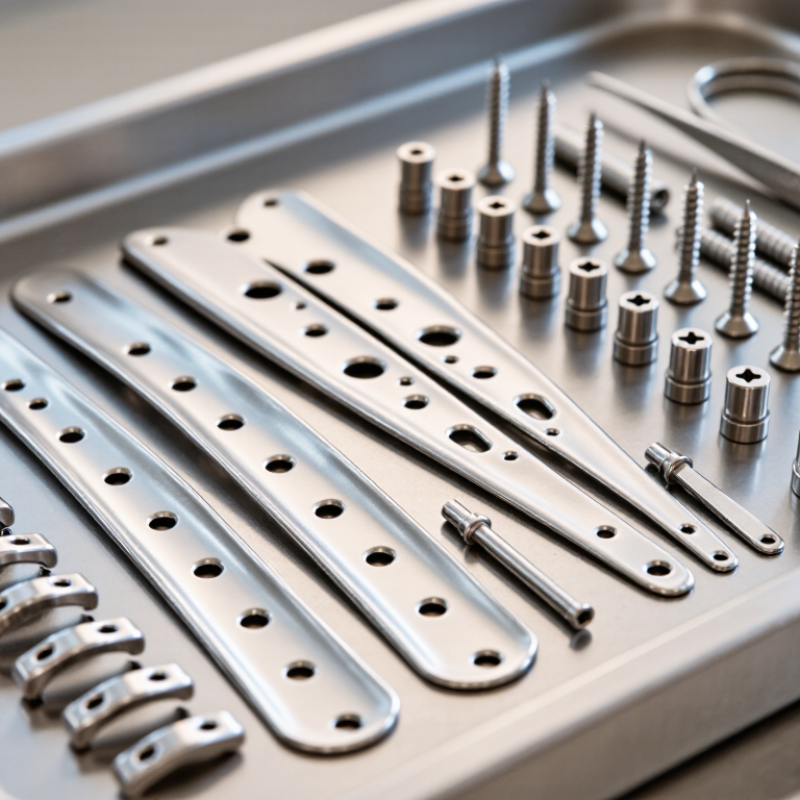
China Top 10 Bone Plate Manufacturers How to Choose?

What Are Bone Plates and Why Does Manufacturer Selection Matter?

Bone plates are medical devices used to stabilize fractured bones during healing. Surgeons place them along the bone and secure them with screws. Their shape, thickness, hole design, and material affect fixation and tissue response. Some plates support simple fractures, while others suit complex areas such as the wrist, ankle, or jaw. The goal sounds simple: hold the bone securely. In practice, small design differences matter. A plate that feels strong in a laboratory may still be difficult to contour or position during surgery.

Manufacturer selection matters because quality is built into every production stage. When reviewing China’s top bone plate manufacturers, examine material certificates, dimensional inspection records, fatigue testing, corrosion resistance, and biocompatibility evidence. Confirm that the company maintains traceability from raw material to finished lot. Reliable manufacturers should also explain quality controls, sterilization arrangements, complaint handling, and regulatory documentation without vague promises. Ask for samples and inspect edges, screw holes, surface finish, and packaging details. These physical checks reveal issues that brochures often hide. Supplier audits and surgeon feedback add useful evidence. Still, no checklist is perfect. I would not judge a factory by equipment alone, because disciplined workers and consistent records matter equally. A lower price may look attractive, but unclear testing can create expensive risks later. Manufacturer choice should connect engineering evidence with practical surgical experience, not marketing language.

How to Identify China’s Top 10 Bone Plate Manufacturers

Identifying China’s top 10 bone plate manufacturers requires more than searching online rankings.

A reliable evaluation starts with documented production experience, qualified engineers, and consistent quality controls. Check whether the manufacturer operates an ISO 13485 quality system and maintains valid product registrations for your target market.

Do not accept certificates without checking their issuing body and scope.

Request technical files for the bone plates, including material specifications, dimensional drawings, sterilization information, and mechanical test results.

Titanium alloy grades should be clearly stated, not hidden behind vague terms such as “medical metal.” Ask for fatigue, bending, corrosion, and biocompatibility evidence where applicable.

A serious manufacturer can explain test methods and provide traceable batch records.

Vague answers matter.

Visit the factory if possible.

Observe machining areas, cleaning stations, packaging rooms, and storage conditions. Look for calibrated inspection tools beside the production line.

Speak with quality personnel, not only sales staff. Review sample plates under magnification for rough edges, uneven holes, or poor surface finishing.

Request a small pilot order before discussing large volumes.

This step may slow purchasing, but it exposes process weaknesses early.

Compare manufacturers using a written scorecard covering quality, technical support, lead time, pricing, complaint handling, and delivery history.

The cheapest quotation can hide weak inspection or unstable materials.

I have learned that polished presentations prove little without records.

Even a capable supplier may have gaps, so ask difficult questions and document every answer.

Which Standards Define Bone Plate Quality and Safety?

When comparing China’s top ten bone plate manufacturers, begin with standards, not catalogue photos. Quality starts with ISO 13485, which evaluates the medical device quality management system. It covers design controls, supplier management, production records, and corrective actions. ISO 14971 adds a risk-management framework for hazards such as plate breakage, screw loosening, and surgical handling errors.

Material safety requires separate evidence. ISO 10993 supports biological evaluation, including irritation, sensitization, and cytotoxicity testing. For titanium alloys, ASTM F67 or ASTM F136 may help verify material requirements. Stainless steel products may require relevant surgical implant specifications. Mechanical performance also matters. ASTM F382 provides a recognized method for testing metallic bone plates under bending loads. However, the test result depends on plate geometry, fixation conditions, and sample preparation. Ask for the complete test configuration, not only a pass certificate.

Traceability should reach the heat number, machining batch, surface treatment, packaging lot, and sterilization status. A credible manufacturer can explain how nonconforming plates are isolated and investigated. The technical file should match the actual product, including dimensions and coating details. Small discrepancies matter.

Standards are not magic.

A certificate can be current yet incomplete. I would also inspect fatigue data, cleaning validation, packaging integrity, and change-control records. Requirements differ between markets, so destination-specific regulatory evidence must be checked. Some evaluations remain imperfect because laboratory loading cannot reproduce every patient’s bone quality or surgical technique. That limitation should be stated clearly, rather than hidden behind polished documentation.

China Top 10 Bone Plate Manufacturers: How to Choose?

Which standards define bone plate quality and safety?

The chart maps major international standards to the quality and safety domains they directly address. ASTM F382 focuses on the mechanical performance of metallic bone plates, ISO 10993 on biological evaluation, ISO 14971 on medical-device risk management, ISO 13485 on quality management systems, and ISO 14630 on general requirements for non-active surgical implants. A reliable supplier should provide documented evidence covering all applicable domains.

Reference standards: ASTM F382, ISO 10993-1, ISO 14971, ISO 13485, and ISO 14630. Applicability depends on the device design, materials, intended use, and regulatory market.

How to Compare Materials, Designs, Certifications, and Prices?

When comparing the top 10 bone plate manufacturers, begin with material evidence, not catalog photography. Titanium alloys are light and generally MRI-compatible, while stainless steel often offers strong value and familiar handling. Ask for chemical composition, tensile data, fatigue testing, and corrosion results. ASTM F382 testing can help compare plate strength under controlled loading. Materials alone are not enough.

Design should match the fracture, not merely the hospital’s usual preference. Locking holes can support weak bone, while compression slots may improve fragment contact. Check contour accuracy, screw compatibility, edge finishing, and instrument ergonomics. A 2024 MarketsandMarkets report valued the global orthopedic implants market at about USD 48.6 billion in 2023, with continued growth expected through 2028. That growth increases choice, but it does not guarantee better clinical performance.

Certification requires careful verification. Look for ISO 13485 quality systems, biological evaluation under ISO 10993, validated sterilization, and traceable lot records. Registration in the target market matters more than an impressive certificate list. The WHO Global Patient Safety Report 2024 estimates that about one in ten patients experiences harm during healthcare delivery, reminding buyers that documentation affects patient safety. Compare total cost, including instruments, training, replacements, shipping, and complaint handling. The cheapest quote may become expensive after one missing component. Clinical evidence is often uneven. That should make procurement teams pause, ask harder questions, and avoid assuming that a polished brochure equals reliable performance.

China Top 10 Bone Plate Manufacturers: How to Choose?
How to Compare Materials, Designs, Certifications, and Prices?

The table below provides a practical, non-branded comparison framework for evaluating bone plate suppliers in China. Price bands are indicative benchmarks for one standard plate only, excluding screws, custom tooling, packaging validation, freight, taxes, and regulatory services. Actual quotations depend on material, dimensions, surface finish, order quantity, and quality requirements.

No. Common Bone Plate Category Typical Application Preferred Material Typical Design Features Key Material or Product Standards to Verify Recommended Certification Evidence Manufacturing Capability to Check Indicative Unit Price Range Best Selection Priority
1 Small-Fragment Compression Plate Simple or oblique fractures of the radius, ulna, fibula, and other small bones. Implant-grade stainless steel or titanium alloy. Compression holes, limited-contact underside, rounded edges, and multiple lengths. Stainless steel: ASTM F138 or ISO 5832-1. Titanium alloy: ASTM F136 or ISO 5832-3. ISO 13485 quality-management certificate, applicable regulatory registration, and material certificates. Consistent hole geometry, burr-free edges, controlled plate thickness, and fatigue-test capability. USD 20–80 Cost and dimensional consistency
2 Locking Compression Plate Fractures requiring angular stability, including osteoporotic or comminuted fractures. Ti-6Al-4V ELI or implant-grade stainless steel. Threaded locking holes, combination holes, fixed-angle screw support, and anatomical contouring. ASTM F136, ASTM F138, ISO 5832-3, ISO 5832-1, and applicable implant performance tests. ISO 13485, biological evaluation documentation under ISO 10993, and regulatory technical files. Thread accuracy, locking-angle control, screw-plate compatibility, and fatigue testing. USD 45–150 Locking reliability and fatigue strength
3 Distal Radius Volar Plate Distal radius fractures, including intra-articular and osteoporotic fracture patterns. Titanium alloy is commonly selected for its strength-to-weight ratio and radiographic characteristics. Low-profile volar contour, multiple distal locking trajectories, and left/right anatomical versions. ASTM F136 or ISO 5832-3 for titanium alloy; verify plate and screw system compatibility. ISO 13485, ISO 10993 biological evaluation, sterilization validation where supplied sterile, and market authorization. Accurate anatomical contour, low prominence, controlled screw-angle tolerance, and trial-fit inspection. USD 50–160 Anatomical fit and low profile
4 Clavicle Plate Midshaft, distal, or lateral clavicle fractures. Titanium alloy or implant-grade stainless steel. Superior or anteroinferior contour, variable screw placement, and optional hook or distal support features. ASTM F136, ASTM F138, ISO 5832-3, or ISO 5832-1, depending on material. ISO 13485, material traceability, biological safety records, and applicable regulatory registration. Multiple anatomical sizes, smooth edges, contour repeatability, and resistance to cyclic loading. USD 40–140 Patient-specific geometry and comfort
5 Proximal Humerus Locking Plate Proximal humerus fractures requiring support of the humeral head and tuberosities. Ti-6Al-4V ELI or implant-grade stainless steel. Multiple divergent locking screws, calcar support, low-profile shape, and suture holes. ASTM F136 or ASTM F138, ISO 5832-3 or ISO 5832-1, and validated screw-system specifications. ISO 13485, ISO 10993 evaluation, design verification, fatigue testing, and regulatory documentation. Precise screw trajectory, plate-to-screw locking performance, and anatomical model verification. USD 60–180 Angular stability and anatomical coverage
6 Distal Femur Locking Plate Distal femoral fractures, including periprosthetic and highly comminuted fractures. Titanium alloy or high-strength implant-grade stainless steel. Long contoured shaft, multiple distal locking holes, variable lengths, and left/right versions. ASTM F136 or ASTM F138, ISO 5832-3 or ISO 5832-1, plus documented mechanical testing. ISO 13485, risk-management file under ISO 14971, biological evaluation, and regulatory approval evidence. Long-plate straightness, hole-position accuracy, fatigue strength, and large-batch inspection capability. USD 90–260 Fatigue performance and plate geometry
7 Proximal Tibia Locking Plate Proximal tibial fractures, including lateral condyle and bicondylar fracture patterns. Ti-6Al-4V ELI or implant-grade stainless steel. Medial or lateral anatomical contour, rafting screws, locking holes, and multiple plate lengths. ASTM F136, ASTM F138, ISO 5832-3, or ISO 5832-1, supported by product-specific test records. ISO 13485, ISO 10993, ISO 14971 risk management, and applicable market authorization documents. Contour accuracy, screw trajectory control, surface finishing, and fatigue-test repeatability. USD 70–220 Fit, stability, and inventory range
8 Pelvic and Acetabular Reconstruction Plate Pelvic ring and acetabular fractures requiring contouring around complex anatomy. Malleable implant-grade stainless steel or titanium alloy, depending on design requirements. Long reconstruction profile, multiple screw holes, contouring capacity, and various plate widths. ASTM F138 or ISO 5832-1 for stainless steel; ASTM F136 or ISO 5832-3 for titanium alloy. ISO 13485, material traceability, biological evaluation, mechanical testing, and regulatory documentation. Controlled malleability, resistance to repeated bending, smooth surface finish, and hole integrity. USD 80–280 Bendability and structural integrity
9 Maxillofacial Mini or Micro Plate Facial, orbital, mandibular, and other craniofacial fracture fixation procedures. Titanium alloy or commercially pure titanium. Very low profile, small screw holes, anatomical curves, and multiple thickness options. ASTM F67 or ISO 5832-2 for commercially pure titanium; ASTM F136 or ISO 5832-3 for titanium alloy. ISO 13485, ISO 10993 biological evaluation, cleanliness validation, and applicable regulatory registration. Micro-machining accuracy, smooth edges, burr control, laser marking, and small-hole inspection. USD 15–90 Low profile and finishing quality
10 Custom or Patient-Specific Bone Plate Complex revision surgery, unusual anatomy, severe bone loss, or cases requiring individualized geometry. Usually Ti-6Al-4V ELI; material selection must match the approved design and manufacturing process. CT-based geometry, patient-specific contour, customized screw trajectories, and optional porous structures. ASTM F136 or ISO 5832-3; additive-manufacturing controls may require additional process qualification. ISO 13485, ISO 14971 risk management, ISO 10993 evaluation, design-history records, and applicable regulatory approval. CT-to-CAD validation, additive or precision-machining qualification, dimensional inspection, and lot traceability. USD 150–600+ Design validation and regulatory control

Supplier comparison checklist: Confirm the exact alloy grade, heat-treatment or additive-manufacturing controls, surface treatment, dimensional inspection method, fatigue and torsion test reports, screw compatibility, lot traceability, ISO 13485 status, ISO 10993 documentation, risk-management records, regulatory authorization, minimum order quantity, lead time, sample policy, tooling ownership, and after-sales handling of nonconforming products.

What Steps Ensure the Right Bone Plate Supplier Is Chosen?

Choosing among China’s top 10 bone plate manufacturers requires more than comparing prices.

The 2024 Grand View Research report forecasts a 4.4% compound annual growth rate for the global orthopedic implants market through 2030. That growth increases supplier competition, but it does not guarantee consistent quality. Start by checking the supplier’s ISO 13485 certification, manufacturing scope, certificate validity, and audit history. Ask for recent batch records, material certificates, and traceability from titanium bar to finished plate.

Request mechanical test reports using relevant ASTM or ISO methods.

Review fatigue strength, bending performance, corrosion resistance, and dimensional tolerances. For patient-contacting materials, examine biological evaluation evidence aligned with ISO 10993. A reliable supplier should explain testing conditions clearly, not only send polished certificates. Visit the facility if possible. Watch how workers control clean areas, laser marking, packaging, and nonconforming products.

Regulatory readiness matters.

Confirm whether the supplier supports technical files, risk management under ISO 14971, and registration requirements in your target market. The FDA’s public device guidance emphasizes documented design controls, complaint handling, and corrective actions. Ask for anonymized complaint trends and recall procedures. Few buyers request them. That is a weakness.

Also compare minimum order quantities, sterilization options, delivery records, and change-notification policies. A low quotation can become expensive after redesigns, delayed validation, or inconsistent plate thickness. Choose evidence over impressive factory photography.

FAQS

How can buyers screen bone plate manufacturers?

Check documented production experience, qualified engineers, and consistent quality controls. Verify the quality system certificate and its issuing body. Request valid product registrations for your destination market. Sales presentations are not enough. Records matter.

Which technical documents should a manufacturer provide?

Request material specifications, dimensional drawings, sterilization details, and mechanical test results. Titanium alloy grades should be stated clearly. Ask for fatigue, bending, corrosion, and biocompatibility evidence where relevant. Traceable batch records should connect documents to products. Vague answers matter.

What should a factory visit include?

Observe machining areas, cleaning stations, packaging rooms, and storage conditions. Look for calibrated inspection tools near production lines. Speak with quality personnel, not only sales staff. Examine sample plates under magnification. Rough edges and uneven holes deserve attention.

Why is a pilot order useful?

A small pilot order can reveal process weaknesses before larger purchasing commitments. Check dimensions, surface finishing, packaging, and documentation. This may slow procurement. It can prevent avoidable surprises.

Which standards help assess quality and safety?

ISO 13485 addresses medical device quality systems. ISO 14971 supports risk management for breakage, loosening, and handling errors. ISO 10993 supports biological evaluation. ASTM F382 can assess metallic plate bending performance. No single certificate proves everything.

What material evidence should buyers compare?

Request chemical composition, tensile data, fatigue testing, and corrosion results. Titanium alloys are light and generally MRI-compatible. Stainless steel can offer strong value and familiar handling. Material choice alone does not determine clinical performance.

How should bone plate designs be evaluated?

Match the design to the fracture and bone condition. Check locking holes, compression slots, contour accuracy, screw compatibility, and edge finishing. Review instrument ergonomics too. The best-looking plate may still fit poorly.

How should manufacturers be compared beyond price?

Use a written scorecard for quality, technical support, lead time, pricing, complaints, and delivery history. Include instruments, training, replacements, shipping, and complaint handling in total cost. Review traceability, packaging integrity, cleaning validation, and change control. I would still hesitate when clinical evidence is uneven.

Conclusion

Bone Plates are essential orthopedic devices used to stabilize fractures, support bone healing, and restore anatomical alignment. Because their performance directly affects surgical outcomes and patient safety, selecting a reliable manufacturer is critical. This guide explains how to identify China’s top manufacturers by evaluating production capabilities, engineering expertise, quality management systems, clinical experience, and customer support. It also highlights the importance of verifying compliance with recognized medical-device standards, traceability requirements, sterilization controls, and material safety.

When comparing suppliers, buyers should review the materials used, implant designs, surface treatments, customization options, testing procedures, certifications, minimum order quantities, lead times, and total costs rather than focusing only on price. A careful selection process should include requesting technical documents, reviewing inspection reports, confirming product consistency, assessing communication and after-sales service, and ordering samples when appropriate. By using these criteria, hospitals, distributors, and medical-device purchasers can choose a qualified supplier capable of delivering safe, dependable, and clinically suitable Bone Plates.

Aria

Aria

Aria is a dedicated marketing professional with a deep passion for innovative strategies and a keen understanding of our company's product offerings. With a wealth of experience in the industry, Aria excels at crafting engaging content that highlights the unique features and benefits of our......