SENJIE Healthy & Technology SENJIE Healthy & Technology

How to Choose the Best Orthopedic Retractors?

Time:2026-09-16 Author:Mason
0%

Choosing the right Orthopedic Retractors can influence visibility, tissue protection, and surgical efficiency. The decision is rarely based on size alone. Experienced surgical teams consider the procedure, incision depth, bone structure, and the amount of controlled exposure required. A retractor for a hip approach may not suit a delicate hand procedure. Small differences matter.

A dependable evaluation begins with blade design, working length, handle balance, and surface finish. Blades should provide stable contact without creating unnecessary pressure on muscles, nerves, or skin. Handles need a secure grip, even when gloves are wet or fatigue develops during a lengthy operation. Stainless steel remains common because it supports repeated sterilization, but material quality and manufacturing precision still require careful review. Check the manufacturer’s instructions for use, cleaning limits, and compatibility with sterilization systems.

The best choice also depends on real operating-room feedback. Surgeons, nurses, and sterile-processing staff may notice problems that product photos hide. Does the instrument remain steady? Can staff pass it safely? Is its weight reasonable after several minutes? These practical questions deserve attention. No single retractor fits every orthopedic procedure. That idea is convenient, but incomplete. A careful selection process compares clinical need, patient anatomy, instrument durability, and institutional protocols. Cost matters, yet the cheapest option may create replacement or handling concerns later. Evidence, documented performance, and professional judgment should guide the final decision. When uncertainty remains, trial evaluation under approved clinical procedures can reveal weaknesses before routine adoption.
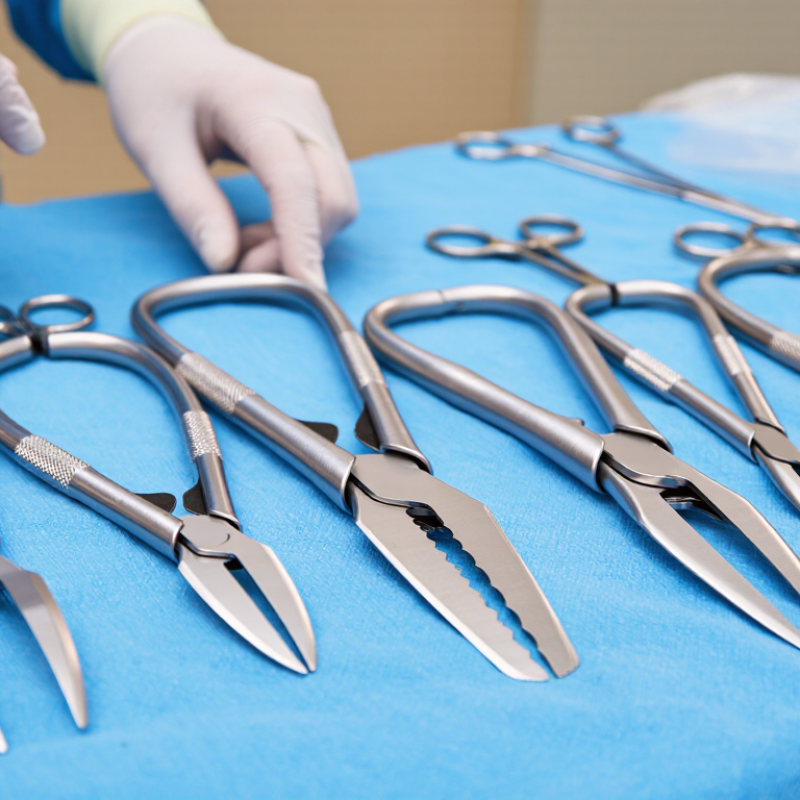
How to Choose the Best Orthopedic Retractors?

Define Surgical Exposure Needs by Approach, Anatomy, Depth, and Access

How to Choose the Best Orthopedic Retractors?

Define Surgical Exposure Needs by Approach, Anatomy, Depth, and Access

Choosing an orthopedic retractor begins with the surgical approach, not the instrument tray. An anterior hip approach needs broad, controlled exposure around the acetabulum. A posterior approach often demands deeper protection near the sciatic nerve. Spine procedures may require narrow access with stable depth control. Anatomy determines the blade angle, width, and pressure. Measure the wound, patient habitus, and target depth before opening instruments. Small details matter.

The AAOS 2023 Burden of Musculoskeletal Diseases report estimates that one in two U.S. adults has a musculoskeletal condition. This highlights how exposure decisions affect many procedures. The Lancet Commission on Global Surgery estimated that five billion people lacked access to safe, affordable surgery in 2015. That finding supports adaptable systems for varied clinical environments. AORN’s Guidelines for Perioperative Practice emphasize positioning, tissue protection, and safe handling. Retractor selection should support these checks, not undermine them.

I prefer gradual exposure and frequent pressure release. It is slower. Sometimes safer. A deep cavity may tempt surgeons to choose a longer blade, but force can bruise muscle or obscure bleeding. Maximum reach is not always correct access. Imaging, palpation, and experience may disagree. Document the blade, depth, and tissue response, then reassess during the procedure.

Compare Handheld, Self-Retaining, Blade, and Frame Retractor Designs

How to Choose the Best Orthopedic Retractors?

Orthopedic retractors should match the procedure, tissue depth, and surgeon’s working angle. Handheld retractors offer quick repositioning and precise control during exposure. An assistant can adjust pressure as the incision changes. However, constant holding may cause fatigue and inconsistent tension during longer procedures.

Self-retaining retractors maintain exposure without continuous manual force. They can improve workflow when the surgical field remains stable. Excessive spreading may compress soft tissue, especially in narrow spaces. Blade retractors provide focused contact, while curved blades can follow anatomical contours. Broad blades distribute pressure better, but they may obstruct nearby instruments.

Frame retractors create a stable platform for deep or complex orthopedic access. Their rigidity is useful, yet setup can take time and limit flexible movement. I have seen teams choose a frame too early, then struggle with an angle that a handheld design would have solved.

Tips: Check blade length, width, curvature, and surface finish before use. Match the retractor to the patient’s anatomy, not only the incision size. Test locking mechanisms and inspect joints for smooth movement. Keep a smaller handheld option available when exposure changes unexpectedly. Tissue color, tension, and instrument access deserve frequent review. The “best” design is not always the strongest one.

Control Tissue Trauma: CDC Reports SSIs in 2–5% of Inpatient Surgeries

How to Choose the Best Orthopedic Retractors?

Control Tissue Trauma: CDC Reports SSIs in 2–5% of Inpatient Surgeries

CDC reports surgical-site infections in 2–5% of inpatient surgeries. That figure makes tissue handling more than an ergonomic concern. It connects instrument choice with wound protection, visibility, and controlled exposure. A retractor should expose bone without crushing skin, muscle, or periosteum. Look for smooth, rounded edges and a blade shape suited to the operative field. Fit matters.

In operating-room practice, selection begins with anatomy, not catalog preference. A shallow blade may protect superficial tissue but fail near a deep joint. A narrow blade may improve access while concentrating pressure on one small area. Adjustable designs can reduce hand fatigue, yet they may create unnoticed pressure during longer procedures. Check the contact surface, locking action, balance, and visibility before use. Ask whether an assistant can reposition it without twisting the wound. Pressure can hide.

Cleanability also deserves attention. Hinges, serrations, and hidden seams can complicate inspection and reprocessing. Follow validated sterilization instructions and examine each instrument for corrosion, roughness, or weakened joints. No retractor eliminates infection risk. This judgment is imperfect. Teams should reassess pressure, moisture, glove changes, and handling throughout surgery. A practical trial on a training model can reveal poor balance before the incision. Monitor the wound edge closely when exposure lasts longer than expected.

How to Choose the Best Orthopedic Retractors?

Control tissue trauma by selecting retractors that provide stable exposure with appropriate pressure distribution, smooth contact surfaces, and minimal unnecessary tissue tension.

The CDC reports that surgical site infections affect approximately 2%–5% of patients undergoing inpatient surgery. This range is a general inpatient-surgery estimate, not an orthopedic-specific rate. Gentle tissue handling, clear visualization, and controlled retraction can support safer surgical technique.

Source: Centers for Disease Control and Prevention (CDC), Surgical Site Infection Basics.

Verify Materials and Reprocessing Under ASTM F899, ISO 7153-1, and ISO 17664

How to Choose the Best Orthopedic Retractors?

A reliable orthopedic retractor begins with verified material selection. ASTM F899 helps identify suitable wrought stainless steel grades for surgical instruments. ISO 7153-1 provides broader guidance on metals used in these devices. Ask for material certificates, grade details, and traceability records. Do not rely on a polished surface alone. A bright finish can hide poor alloy selection or weak processing controls. Corrosion resistance, strength, and tissue contact must match the intended procedure.

Tips: Request the instrument’s reprocessing instructions before purchase. Check whether cleaning agents, washer-disinfectors, sterilizers, and drying methods are clearly specified. ISO 17664 focuses on the processing information supplied for reusable healthcare products. Look for validated steps, temperature limits, inspection points, and maintenance guidance. A vague instruction sheet creates avoidable risk. It may also reveal that the product was not fully considered for daily clinical use.

Compare the manufacturer’s claims with your facility’s actual workflow. Narrow joints, deep serrations, and locking mechanisms can retain soil after surgery. Staff should inspect these areas under adequate lighting. Reprocessing validation supports safety, but it does not replace local training or routine monitoring. Standards are essential references, not magic shields. A certificate can be incomplete, outdated, or misunderstood. Ask practical questions, record the answers, and reconsider the purchase when evidence remains unclear.

How to Choose the Best Orthopedic Retractors? — Verify Materials and Reprocessing Under ASTM F899, ISO 7153-1, and ISO 17664
Evaluation Dimension What to Check Typical Material or Design Option Relevant Standard or Reference Point Practical Selection Guidance Verification Evidence
Base Material Identification Confirm the exact alloy or polymer designation rather than accepting a generic description such as “surgical steel.” Martensitic stainless steel, austenitic stainless steel, precipitation-hardening stainless steel, titanium alloy, or engineering polymer components. ASTM F899 provides chemical and metallurgical requirements for stainless steels used in surgical instruments. ISO 7153-1 addresses materials commonly used for surgical instruments. Preferred: fully specified material Material certificate, heat or lot traceability, supplier declaration, and finished-device technical documentation.
Jaw and Blade Strength Assess resistance to bending, permanent deformation, edge damage, and loss of alignment during orthopedic exposure. Hardened martensitic stainless steel is commonly selected for rigid, high-strength jaws and narrow blades. Precipitation-hardening grades may be used where higher strength is required. ASTM F899 grade and condition requirements should be checked against the instrument’s intended mechanical function. Preferred: grade matched to load Mechanical test data, hardness range, dimensional inspection, jaw alignment results, and functional testing on representative production samples.
Corrosion Resistance Check resistance to staining, pitting, crevice corrosion, and corrosion caused by chloride-containing cleaners or inadequate drying. Austenitic stainless steel generally offers strong corrosion resistance. Martensitic grades can provide higher hardness but require suitable composition, heat treatment, passivation, and reprocessing control. ASTM F899 material chemistry and condition; ISO 7153-1 material suitability considerations; validated cleaning and sterilization instructions under ISO 17664-1. Conditional: depends on grade and process Corrosion or passivation test reports, surface-finish specification, cleaning-agent compatibility data, and visual inspection after simulated reprocessing.
Titanium Construction Consider low density, handling comfort, magnetic compatibility, and contact with dissimilar metals. Titanium or titanium alloy may reduce instrument weight and is generally non-magnetic, but it can have different wear, galling, and surface-marking behavior than stainless steel. ISO 7153-1 includes consideration of metallic materials used for surgical instruments. The specific titanium grade and surface treatment must be documented by the manufacturer. Conditional: useful for weight-sensitive designs Alloy designation, surface-treatment information, galvanic-compatibility assessment, dimensional stability data, and reprocessing validation.
Surface Finish Inspect for smooth, cleanable surfaces without burrs, sharp unintended edges, deep scratches, exposed inclusions, or rough transitions. Fine-passivated or electropolished stainless-steel surfaces; carefully finished titanium surfaces; smooth polymer inserts where applicable. ISO 7153-1 supports material suitability, while ISO 17664-1 requires processing information that can be followed to achieve effective cleaning and sterilization. Preferred: smooth and inspectable surfaces Surface-finish specification, magnified visual inspection, roughness measurements where specified, and post-processing cleanliness results.
Ratchet, Hinge, and Box Lock Evaluate accessibility of joints, freedom of movement, resistance to binding, and the ability to remove soil from hinge areas. Open or accessible joints are generally easier to clean than enclosed cavities. Hinges should be designed to tolerate repeated opening, cleaning, lubrication, and sterilization. ISO 17664-1 requires processing information for the device, including disassembly, cleaning, inspection, maintenance, packaging, and sterilization steps where applicable. Preferred: accessible and serviceable joints Validated cleaning method, disassembly instructions, lubricant specification, cycle-life testing, and inspection criteria for joint movement.
Insulating or Polymer Components Check whether polymer handles, coatings, pads, or inserts tolerate the specified chemicals, temperatures, vacuum conditions, and sterilization cycles. Medical-grade polymer components may improve grip or protect tissue, but compatibility varies by polymer formulation and sterilization method. ISO 7153-1 covers materials used in surgical instruments; ISO 17664-1 requires device-specific processing information and defined limitations. Verify: material-specific limits Polymer identity, maximum temperature, chemical compatibility data, aging study, repeated-cycle testing, and instructions for use.
Cleaning Compatibility Confirm compatibility with the facility’s neutral or mildly alkaline detergent, enzymatic cleaner, washer-disinfector, and manual cleaning method. Stainless steel and titanium are commonly compatible with validated medical-device detergents, but high-chloride, highly acidic, or improperly concentrated chemicals may damage surfaces. ISO 17664-1 requires validated or specified processing instructions. The user must follow the detergent concentration, temperature, contact time, and water-quality limits stated by the manufacturer. Preferred: compatible with existing workflow Detergent compatibility assessment, validated cleaning study, water-quality requirements, and written reprocessing instructions.
Manual Cleaning Requirements Determine whether brushing, flushing, opening, or soaking is required and whether all soil-retaining areas are reachable. Retractors with textured grips, serrations, hinges, or narrow gaps may require dedicated soft brushes and thorough rinsing. ISO 17664-1 addresses information needed for manual and automated cleaning, including preparation, cleaning agents, equipment, and acceptance criteria. Conditional: depends on geometry Step-by-step instructions, brush dimensions, flushing volumes if applicable, maximum delay before cleaning, and cleaning-validation results.
Automated Washer-Disinfector Use Check loading orientation, open or unlocked position, spray exposure, cycle parameters, and protection from contact damage. Open, hinged retractors may be suitable for automated processing when positioned to expose all surfaces and when the device is validated for the selected cycle. ISO 17664-1 requires processing instructions and validated parameters for applicable automated methods; the washer-disinfector itself should be operated according to its validated cycle. Verify: cycle and loading configuration Automated cleaning and thermal-disinfection validation, loading diagram, cycle parameters, and drying requirements.
Sterilization Compatibility Confirm compatibility with the intended sterilization method, including temperature, exposure time, pressure, packaging, and drying conditions. Reusable metal retractors are commonly processed by validated steam sterilization. Low-temperature methods require specific compatibility confirmation, especially for polymers, coatings, and lubricants. ISO 17664-1 requires the manufacturer to specify applicable sterilization methods and parameters. Sterilization-process standards and facility procedures also apply. Preferred: validated steam compatibility Device-specific sterilization instructions, maximum exposure limits, packaging guidance, drying requirements, and repeated-cycle performance data.
Drying and Water Quality Control residual moisture, mineral deposits, and chloride contamination after rinsing and sterilization. Passivated stainless steel can still stain or corrode when contaminated water, incomplete rinsing, or wet storage is present. ISO 17664-1 requires relevant rinsing and drying information. Water quality and facility processing controls should be defined and monitored. Preferred: complete drying before storage Water-quality specification, drying instructions, visual cleanliness criteria, and records of reprocessing parameters.
Inspection and Maintenance Inspect for cracks, corrosion, burrs, bent blades, loose fasteners, damaged insulation, reduced jaw alignment, and restricted movement. All reusable retractors require inspection after cleaning and before packaging or use. Hinged instruments may require approved medical-device lubricant. ISO 17664-1 includes inspection, maintenance, and functional testing information where applicable. Preferred: documented release criteria Inspection checklist, functional test method, lubrication instructions, repair limits, and criteria for removal from service.
Traceability and Change Control Ensure material, manufacturing, surface treatment, and reprocessing changes are controlled and assessed for impact. Changes in alloy supplier, heat treatment, passivation, coating, polymer formulation, or surface finish can affect performance and reprocessing compatibility. ASTM F899 and ISO 7153-1 support material specification; ISO 17664-1 supports controlled, device-specific processing information. Preferred: controlled technical file Revision-controlled drawings, material and process records, risk assessment, validation reports, and change-notification procedure.
Overall Selection Decision Select the retractor only after confirming mechanical performance, tissue-contact material suitability, cleanability, sterilization compatibility, and lifecycle support. A well-specified stainless-steel or titanium design with accessible surfaces and validated reprocessing instructions is generally preferable to an instrument selected by appearance alone. Use ASTM F899 and ISO 7153-1 to assess material suitability, and ISO 17664-1 to assess the completeness and usability of processing instructions. Preferred: evidence-based selection Complete technical documentation, representative performance testing, reprocessing validation, user instructions, and documented acceptance criteria.
Important: ASTM F899 and ISO 7153-1 do not replace device-specific performance testing or reprocessing validation. ISO 17664-1 does not itself sterilize a device; it specifies the information that the manufacturer should provide for processing reusable medical devices. Always follow the current manufacturer’s validated instructions and the healthcare facility’s approved procedures.

Assess Safety, Ergonomics, and Traceability Under ISO 14971 and FDA Rules

How to Choose the Best Orthopedic Retractors?

An orthopedic retractor should support controlled exposure without creating new hazards. ISO 14971 requires a documented risk process, from hazard identification to residual-risk evaluation. Look for rounded working edges, secure locking mechanisms, and predictable force transmission. A handle that twists under load is not a minor inconvenience. It may increase tissue trauma or surgeon fatigue. The U.S. Bureau of Labor Statistics reported approximately 947,000 musculoskeletal-disorder cases involving days away from work in 2023. That broad workforce figure is not surgical data, but it reinforces one point: ergonomics deserves measurable attention.

Assess grip diameter, balance, thumb clearance, and visual access during simulated procedures. Ask users to operate the instrument with gloves and wet hands. Record applied force, awkward wrist angles, and repositioning frequency. Short trials can reveal uncomfortable pressure points. They can also mislead. A device may feel excellent for ten minutes, then become tiring during a complex case. Therefore, usability evidence should include realistic procedure durations and different hand sizes.

Traceability must reach beyond the package label. Under FDA Unique Device Identification requirements, records should connect the device identifier with lot or serial information, inspection results, and reprocessing history. The FDA’s Medical Device Reporting system also shows why complaint review matters; recurring failures can expose risks missed during bench testing. Maintain links between risk controls, verification results, nonconformities, and field feedback. A simple audit trail is valuable. An incomplete one is dangerous. Do not treat ISO 14971 as paperwork; treat it as a living decision record that changes when evidence changes.

FAQS

How should an orthopedic retractor match the procedure?

Match the design to tissue depth, anatomy, and the surgeon’s working angle. Handheld models allow quick repositioning during changing exposure. Self-retaining models work well when the field stays stable. The strongest option is not always the best.

What are the benefits and limits of handheld retractors?

An assistant can adjust pressure as the incision changes. This supports precise exposure and fast angle changes. However, prolonged holding may cause fatigue. Tension can also become inconsistent.

When is a self-retaining retractor useful?

It maintains exposure without continuous manual force. This may improve workflow during stable procedures. Excessive spreading can compress soft tissue, especially in narrow spaces. Check tissue color and tension often.

How do blade retractors differ from frame retractors?

Blade retractors provide focused contact near the target area. Curved blades can follow anatomical contours. Frame retractors create a rigid platform for deep or complex access. Their setup may take longer and reduce flexibility.

How can teams avoid choosing a frame retractor too early?

Consider whether the working angle may change during exposure. A handheld option can solve unexpected access problems quickly. A frame may feel stable but become restrictive. Reconsider the setup.

Which blade features should be checked before use?

Review blade length, width, curvature, and surface finish. Broad blades distribute pressure more evenly. They may also obstruct nearby instruments. Inspect the contact surface under good lighting.

What material information should be requested before purchasing?

Request material certificates, grade details, and traceability records. Relevant guidance includes ASTM F899 and ISO 7153-1. Do not judge quality by a bright polished surface. Appearance can mislead.

What reprocessing information should a reusable retractor include?

Instructions should specify cleaning agents, washer-disinfectors, sterilizers, and drying methods. Look for validated temperatures, inspection points, and maintenance steps. Check joints, serrations, and locks for retained soil. Vague instructions are a warning.

Does certification guarantee safe daily performance?

No. Certificates may be incomplete, outdated, or misunderstood. Reprocessing validation supports safety but does not replace local training. Compare instructions with the facility’s real workflow. Evidence still needs review.

Conclusion

Choosing the right Orthopedic Retractors begins with clearly defining the surgical exposure required for each procedure. Surgeons should evaluate the operative approach, anatomy, depth, and available access before selecting a design. Handheld retractors can provide flexible, moment-to-moment control, while self-retaining systems may reduce assistant fatigue during longer procedures. Blade shapes and frame-based systems should be matched to tissue location, working depth, and the need for stable visualization.

Tissue protection is equally important, especially because surgical site infections are reported in approximately 2–5% of inpatient surgeries. Retractors should provide adequate exposure without excessive pressure, sharp edges, or unnecessary tissue stretching. Selection should also include material verification and validated cleaning, disinfection, sterilization, and maintenance processes aligned with ASTM F899, ISO 7153-1, and ISO 17664. Finally, assess ergonomics, handling safety, risk controls, and traceability in accordance with ISO 14971 principles and applicable FDA requirements. A well-documented selection process supports consistent performance, safer procedures, and reliable instrument management.

Mason

Mason

Mason is a seasoned marketing professional with a deep expertise in the company's offerings and a passion for driving brand awareness. With a strong background in digital marketing strategies, he has an innate ability to connect with diverse audiences and effectively communicate product benefits.......