 SENJIE Healthy & Technology
Choosing the right Orthopedic Clamps is a practical decision, not a simple catalog exercise. In a busy operating room, a clamp must provide controlled pressure, stable handling, and predictable release. Its jaws should meet evenly, without damaging delicate tissue or slipping from the intended position. Small details matter. A rough hinge can interrupt a precise maneuver. An awkward ring handle can strain the surgeon’s fingers during a long procedure.
Sir John Charnley, a pioneering orthopedic surgeon, is often associated with this principle: “The surgeon must be an engineer, a craftsman, and an artist.” That idea remains useful when evaluating Orthopedic Clamps. Technical specifications matter, but clinical judgment matters too. Experienced teams examine jaw geometry, locking strength, corrosion resistance, weight, and sterilization compatibility. They also consider whether the instrument suits the procedure, glove size, and surgical workflow. A clamp may look excellent in photographs and still feel unbalanced in practice.
These seven tips focus on measurable features and real operating-room concerns. They address material quality, grip comfort, jaw alignment, ratchet performance, cleaning requirements, and manufacturer reliability. They also encourage careful comparison instead of impulsive purchasing. No clamp is perfect for every case. That is worth admitting. Product reviews can overlook fatigue, maintenance time, or inconsistent locking. Hands-on inspection remains valuable. When possible, surgeons and technicians should test the instrument under realistic conditions, document their observations, and review current clinical guidance before making a final choice.
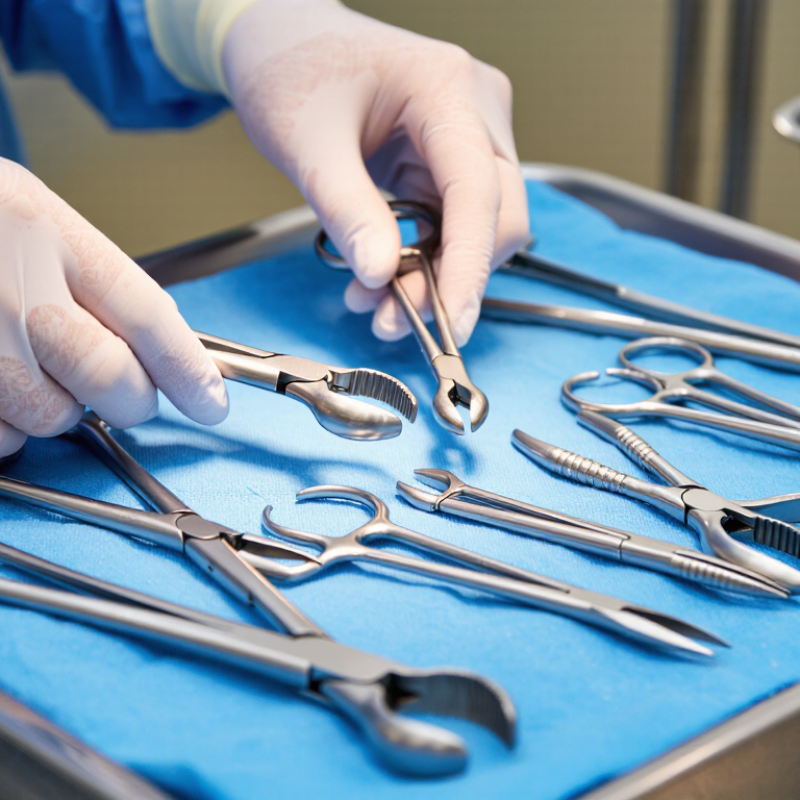
7 Tips for Choosing the Best Orthopedic Clamps
Orthopedic Clamps: Purpose, Design, and Common Applications
Orthopedic clamps temporarily stabilize bone during reduction, fixation, and implant positioning. Their jaws must hold firmly without crushing fragile cortical surfaces. The World Health Organization estimates that 1.71 billion people live with musculoskeletal conditions worldwide. That scale makes dependable surgical instrumentation important, even when one clamp seems minor.
Tip: Match the jaw shape to the anatomy. Pointed jaws can improve grip, while broad jaws may distribute pressure more gently. Check the working length, opening range, ratchet control, and handle comfort. A clamp can feel secure and still be unsuitable. That is an easy mistake.
Tip: Inspect design details before purchase. Look for smooth jaw alignment, controlled locking, and visible surfaces that support cleaning. FDA reprocessing guidance stresses validated cleaning and sterilization instructions for reusable devices. Ask for material specifications, testing records, and maintenance limits. Marketing language is not evidence.
Common applications include fracture reduction, temporary plate positioning, and holding bone fragments during drilling. Some designs support minimally obstructed imaging, but radiographic compatibility must be verified. In practical instrument reviews, balance matters more than appearance. Heavy handles can cause fatigue during lengthy procedures. Small flaws matter.
Tip: Test the clamp with gloved hands and realistic force. Confirm that the ratchet releases predictably. Review the manufacturer’s instructions for use and your facility’s sterilization process. Selection should involve orthopedic surgeons, operating-room staff, and sterile-processing professionals. Even experienced teams occasionally overlook jaw wear. That deserves reflection.
| Tip | Selection Dimension | What to Evaluate | Common Orthopedic Clamp Examples | Why It Matters |
|---|---|---|---|---|
| 1 | Match the Clamp to the Procedure | Identify whether the clamp is intended for bone reduction, temporary fixation, traction, soft-tissue protection, or instrument holding. | Reduction forceps, bone-holding forceps, pointed reduction clamps, and self-centering clamps. | Different procedures require different jaw shapes, working lengths, and holding forces. A clamp designed for temporary reduction may not be suitable for definitive fixation. |
| 2 | Choose the Correct Jaw Design | Compare pointed, serrated, atraumatic, broad, curved, or fenestrated jaws according to the tissue and bone surface involved. | Pointed clamps for cortical purchase; serrated jaws for firm bone grip; broad jaws for distributing pressure over larger surfaces. | Jaw geometry affects grip, visibility, pressure distribution, and the risk of damaging bone or nearby soft tissue. |
| 3 | Verify Size and Working Reach | Check overall length, jaw depth, opening width, and access requirements for superficial or deep surgical sites. | Short clamps for small or exposed bones; long-shaft clamps for deep approaches; narrow jaws for restricted spaces. | An unsuitable size can obstruct the surgical field, fail to reach the fracture, or apply force at an ineffective angle. |
| 4 | Assess Locking and Adjustment Features | Review ratchets, locking mechanisms, sliding or adjustable arms, and the ability to make controlled incremental adjustments. | Ratchet-locking bone clamps for sustained holding; adjustable clamps for variable fracture widths; non-locking forceps for rapid repositioning. | Controlled locking can maintain reduction, while excessive or poorly controlled force may cause displacement or bone damage. |
| 5 | Consider Material and Surface Finish | Confirm that the instrument is made from surgical-grade stainless steel or another validated reusable-surgical material, with a smooth, corrosion-resistant finish. | Reusable stainless-steel clamps with polished, matte, or satin finishes designed to reduce glare and support cleaning. | Material quality influences strength, corrosion resistance, sterilization compatibility, and service life. |
| 6 | Evaluate Ergonomics and Surgical Visibility | Look for balanced handles, comfortable finger rings or grips, smooth action, and a profile that does not unnecessarily block the operative view. | Lightweight reduction clamps, angled handles, and fenestrated designs that improve access and visualization. | Good ergonomics can improve control, reduce hand fatigue, and support precise placement during lengthy procedures. |
| 7 | Confirm Cleaning, Sterilization, and Maintenance Needs | Check manufacturer-approved cleaning methods, sterilization parameters, joint accessibility, inspection requirements, and repair support. | Reusable hinged clamps with cleanable joints, visible serrations, and serviceable locking components. | Proper reprocessing helps reduce contamination risk and preserves jaw alignment, locking performance, and instrument function. |
It temporarily stabilizes bone during reduction, fixation, drilling, or implant positioning. It is not a permanent fixation device.
Pointed jaws can improve grip. Broad jaws distribute pressure more gently across fragile bone surfaces.
Measure the target anatomy before selection. A narrow clamp may concentrate pressure, while a broad clamp may slip or block access.
Curved jaws can follow femoral or pelvic contours. Straight jaws may improve access in confined surgical spaces.
Inspect jaw alignment, opening range, ratchet control, handle clearance, material details, and cleaning requirements.
Test it with gloves, retractors, and the intended fixation system. Confirm predictable locking and release.
Follow validated cleaning and sterilization instructions. Inspect alignment, jaw wear, visible damage, and difficult-to-clean surfaces.
Orthopedic surgeons, operating-room staff, and sterile-processing professionals should review the selection together.
Yes. Limited incision angles can prevent proper placement. That mistake is easy to miss.
Record the selected size, shape, and reasoning. Review the choice afterward, because experience is useful but imperfect.
Choosing the right Orthopedic Clamps is essential for achieving secure tissue or bone control during orthopedic procedures. These instruments are designed to provide stable, precise handling while minimizing unnecessary pressure on anatomical structures. When evaluating a clamp, consider its size, shape, jaw configuration, and compatibility with the intended surgical site. A suitable design should offer clear access, reliable positioning, and comfortable operation for the surgical team.
Material selection also affects grip strength, durability, corrosion resistance, and long-term performance. Clamps should be easy to clean and compatible with approved sterilization methods to support safe reuse and consistent hygiene. Ergonomic handles, controlled locking mechanisms, and a dependable grip can improve handling and reduce user fatigue. Ultimately, the best clamp depends on the specific procedure, the anatomy involved, the required level of force, and the surgeon’s preferred technique. Careful comparison of these factors helps ensure effective performance, patient safety, and dependable results.
