Selecting reliable Needle Holders requires more than comparing prices or polished product photos. Global buyers need evidence of consistent jaw alignment, secure ratchet performance, corrosion resistance, and comfortable handling. These details become visible during repeated suturing, sterilization cycles, and close inspection under operating-room lighting. Small defects matter.
Dr. Atul Gawande, surgeon and quality-improvement expert, wrote, “Better is possible. It does not take genius. It takes diligence.” His observation fits surgical instruments well. A dependable needle holder reflects disciplined design, controlled machining, careful polishing, and documented inspection. This guide reviews China’s top 10 Needle Holder manufacturers through that practical lens. It considers manufacturing experience, material choices, tungsten carbide inserts, stainless-steel grades, customization support, quality systems, and export reliability.
No ranking is perfect. Buyer priorities differ. A hospital may value long-term durability, while a distributor may need packaging flexibility and stable lead times. Some manufacturers offer impressive catalogs but limited traceability. Others produce less attractive samples yet maintain stronger process control. That difference deserves attention. We examine each company’s product range, technical strengths, certification evidence, communication quality, and suitability for global procurement. Buyers should still request samples, inspection reports, sterilization guidance, and current compliance documentation before placing an order. Good decisions are rarely made from a brochure alone. They come from details, testing, and honest questions.
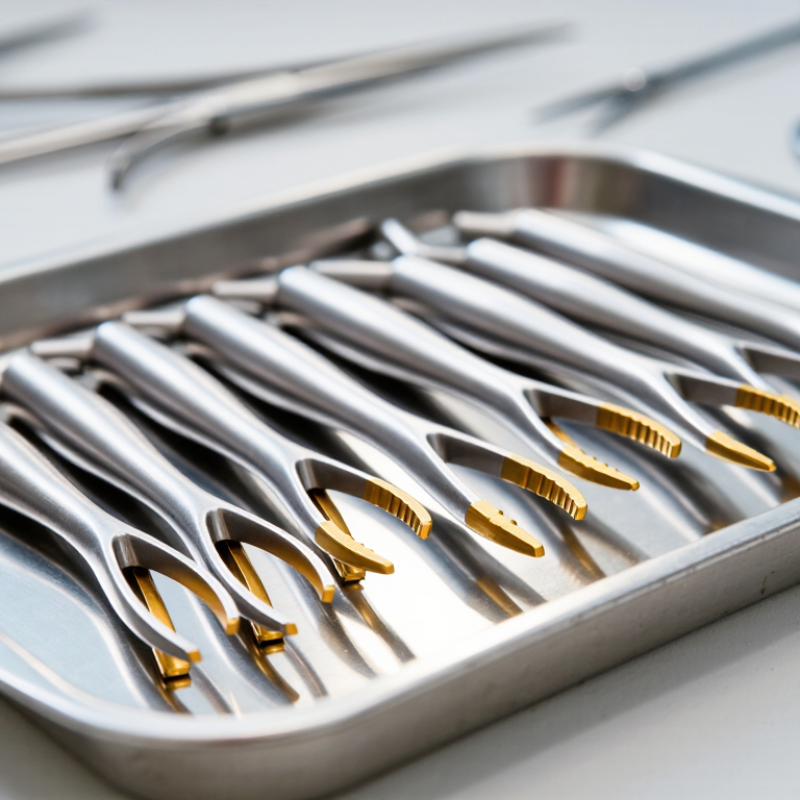
What Needle Holders Are and Why China Matters to Global Buyers
Needle holders are surgical instruments designed to grasp and guide needles during wound closure. Their jaws must hold a needle firmly without crushing it. A ratchet mechanism helps maintain pressure during delicate movements. Handle balance also affects wrist control and operating comfort.
China matters to global buyers because its manufacturing base supports metal forming, CNC machining, heat treatment, polishing, and medical instrument assembly. These capabilities often exist within connected regional supply chains.
Buyers can compare different factories for reusable or disposable needle holders. Some suppliers also provide custom jaw patterns, handle shapes, and packaging options.
During supplier evaluation, inspect jaw alignment, ratchet engagement, surface finishing, and corrosion resistance. Request production samples, material records, inspection reports, and traceability documents.
Where applicable, verify quality systems against recognized medical-device standards. A low quotation cannot replace consistent performance.
I have found that minor jaw misalignment can become a serious usability concern. No supplier is perfect. Buyers should ask how defects are recorded, corrected, and prevented. Factory audits, batch testing, and clear communication reduce uncertainty before large orders are placed.
How the Top 10 Chinese Needle Holder Manufacturers Were Selected
How the Top 10 Chinese Needle Holder Manufacturers Were Selected
The selection began with verifiable manufacturing evidence, not online visibility. Each candidate needed documented production capacity, export experience, and a quality system aligned with ISO 13485. This standard is widely used for medical-device quality management. It emphasizes risk control, traceability, process validation, and corrective action.
Market data also shaped the evaluation. Grand View Research reported that the global surgical instruments market reached approximately USD 13.8 billion in 2023. Such growth increases buyer demand, but it also raises quality risks. Therefore, we reviewed stainless-steel grades, jaw alignment, ratchet consistency, surface finishing, and sterilization compatibility. Small defects matter. A needle holder that slips during a procedure is not a minor inconvenience.
Practical testing carried equal weight. Samples were checked for grip stability, hinge movement, corrosion resistance, and repeated opening cycles. We compared inspection records with ISO 2859-1 sampling practices, commonly used for acceptance quality limits. Supplier communication was also assessed. Can the factory explain tolerances clearly? Can it provide batch records without delays? These questions exposed differences that product photos could hide. The method is not perfect; laboratory conditions cannot reproduce every operating room. However, combining documentation, sample testing, factory experience, and buyer feedback creates a more reliable shortlist for global purchasers.
Profiles of China’s Top 10 Needle Holder Manufacturers
China’s top 10 needle holder manufacturers show different strengths in surgical instrument production. Several focus on precision machining, using stainless steel grades suitable for repeated sterilization. Others specialize in tungsten-carbide inserts, curved jaws, or micro-surgical designs. Their profiles often include ISO 13485 systems, export experience, and batch-level inspection records. However, certification alone does not prove consistent grip performance.
Fortune Business Insights valued the global surgical instruments market at about USD 14.76 billion in 2023. Grand View Research also forecasts steady growth through 2030. This demand raises the importance of reliable Chinese suppliers. The strongest profiles show jaw alignment tests, ratchet-cycle data, surface-finish controls, and documented material certificates. Some manufacturers offer private labeling and small trial orders. Others perform better with large-volume contracts. A polished catalog is not enough. Buyers should inspect real samples.
Tips: Request three samples from different production batches. Test locking force, jaw symmetry, corrosion resistance, and sterilization endurance. Ask for ISO 13485 certificates, inspection plans, and corrective-action records. Reported data may look impressive, but independent verification remains essential. One overlooked issue is operator comfort. A holder can meet dimensions yet feel tiring during long procedures. Profiles should therefore include handle balance, joint smoothness, and actual user feedback. That detail is often missing.
China Top 10 Needle Holder Manufacturers for Global Buyers
This chart presents a practical supplier-screening framework for evaluating needle holder manufacturers. The percentages represent recommended purchasing priorities rather than company-specific performance or rankings.
Quality consistency, material traceability, sterilization compatibility, customization capability, regulatory documentation, production capacity, and export support are commonly reviewed when global buyers compare surgical instrument suppliers.
Comparing Product Quality, Certifications, Capacity, and Pricing
China Top 10 Needle Holder Manufacturers for Global Buyers
When comparing ten needle holder manufacturers, product quality should lead the review. Inspect jaw alignment, ratchet engagement, surface finish, and handle comfort. A properly aligned jaw should grip a fine needle without crushing it. Ask for samples from different production batches. One sample can hide inconsistency.
Certifications provide useful evidence, but they do not replace testing. Request current ISO 13485 certification, material declarations, inspection records, and traceability procedures. Check whether the certificate covers the actual factory and product scope. For surgical instruments, stainless steel grade, corrosion resistance, and sterilization compatibility require documented verification. A polished surface may look excellent while still failing repeated-use testing.
Capacity affects delivery reliability more than brochure numbers. Review monthly output, equipment lists, staffing, and quality-control checkpoints. Ask how the factory handles urgent replenishment and rejected batches. Pricing should include packaging, inspection, tooling, shipping terms, and replacement policy. The cheapest quotation is rarely the lowest total cost. In practice, buyers sometimes compare different specifications under the same product name. That mistake distorts the result. Request identical drawings, tolerances, quantities, and packaging before comparing prices. Lead time also deserves scrutiny. A short promise may depend on overtime or subcontracting. It is worth asking for evidence.
How Global Buyers Can Evaluate and Source from These Manufacturers
China’s needle holder sector deserves careful, evidence-based sourcing. Fortune Business Insights valued the global surgical instruments market at USD 14.88 billion in 2023. Demand is growing, but quality varies widely between factories. WHO’s Global Atlas of Medical Devices identifies more than two million medical device types. Needle holders occupy a small category, yet their reliability affects every suture procedure.
For a China top-10 shortlist, global buyers should examine material certificates, jaw alignment, ratchet consistency, and corrosion resistance. Request production samples from the same lot, not showroom pieces. Check the manufacturer’s ISO 13485 certificate, certification scope, audit status, and test records. Verify whether the factory controls forging, machining, passivation, cleaning, and packaging internally. A polished catalog proves little. Ask for traceability from steel coil to packed instrument.
Commercial evaluation also needs landed-cost analysis. Include tooling, inspection, freight, import duties, and replacement rates. Clarify minimum order quantities and corrective-action procedures. For reusable instruments, request cycle-testing data after repeated cleaning and sterilization. For sterile products, review packaging validation and shelf-life evidence. Suppliers should provide clear technical files for the buyer’s destination market. Do not rush. Price alone is a weak filter. A low quotation can hide inconsistent jaws, uneven finishing, or weak after-sales support. Some supplier comparisons remain imperfect because factory data is self-reported. Buyers should record unanswered questions, conduct a documented audit, and reassess the shortlist before signing.
FAQS
It grasps and guides needles during wound closure. Its jaws should hold firmly without crushing the needle.
China offers metal forming, CNC machining, heat treatment, polishing, and assembly. Regional supply chains can support different product options.
Check jaw alignment, ratchet engagement, hinge movement, surface finish, and corrosion resistance. Handle balance also affects wrist comfort.
Request material records, inspection reports, production samples, and traceability documents. Quality-system certificates and corrective-action records are also useful.
Request three samples from different production batches. Test locking force, jaw symmetry, repeated opening cycles, and sterilization endurance.
No. Certification supports quality management, but it cannot prove every holder grips consistently. Real samples remain necessary.
Suppliers should explain tolerances clearly and provide batch records promptly. Delayed or vague answers may signal process-control problems.
Operator comfort is often overlooked. A holder may meet dimensions yet feel tiring during a long procedure.
No. A low price cannot replace reliable grip, corrosion resistance, and traceability. Small defects matter.
No evaluation method is perfect. Laboratory tests cannot reproduce every operating-room condition, so buyer feedback still deserves attention.
Conclusion
This guide introduces Needle Holders and explains why China has become an important sourcing destination for global medical instrument buyers. It outlines the practical features, common applications, material considerations, and manufacturing capabilities that distinguish reliable suppliers. To identify the top 10 manufacturers, the selection process focuses on product consistency, production experience, quality management, certifications, export readiness, customization support, and customer service rather than brand recognition alone.
The article also compares these manufacturers in terms of product quality, compliance documentation, production capacity, delivery efficiency, and pricing structure. For international buyers, it provides a clear framework for evaluating potential suppliers, including reviewing samples, verifying certifications, confirming inspection procedures, assessing communication, and clarifying packaging and logistics requirements. By following a structured sourcing process and balancing quality with total purchasing cost, buyers can make more informed decisions and establish dependable, long-term cooperation with suitable Chinese Needle Holders manufacturers.
 SENJIE Healthy & Technology
