SENJIE Healthy & Technology SENJIE Healthy & Technology

Top 10 Types of Orthopedic Forceps for Global Buyers?

Time:2026-09-06 Author:Sophia
0%

Choosing the right Orthopedic Forceps can influence surgical control, tissue handling, and instrument longevity. Global buyers often compare product names without examining jaw design, grip balance, or material quality. That approach can create avoidable problems.

This guide introduces ten common types of orthopedic forceps used in bone, trauma, and reconstructive procedures. Examples include bone-holding forceps, reduction forceps, pointed reduction forceps, plate-holding forceps, and dressing forceps. Each design serves a different practical purpose. Serrated jaws may improve grip on dense bone, while smooth jaws can reduce surface marking on delicate materials. Curved profiles can improve access around joints and deep operative sites. Small details matter.

Selection should consider stainless steel grade, hinge movement, jaw alignment, handle comfort, and sterilization compatibility. Buyers should also review manufacturer documentation, inspection records, and quality-management credentials. Product photos are useful, but they cannot confirm tactile performance. A forceps may look precise and still feel stiff during repeated use. That is worth checking.

Clinical experience suggests that no single instrument fits every orthopedic task. Yet, this guide cannot replace institutional protocols, surgeon preference, or validated product testing. Some recommendations may require reconsideration when handling unusual anatomy, heavy fixation systems, or frequent sterilization cycles. Practical evaluation remains essential. Hold the instrument. Open the jaws. Check the lock. Then compare performance, reliability, and total purchasing value across suppliers.
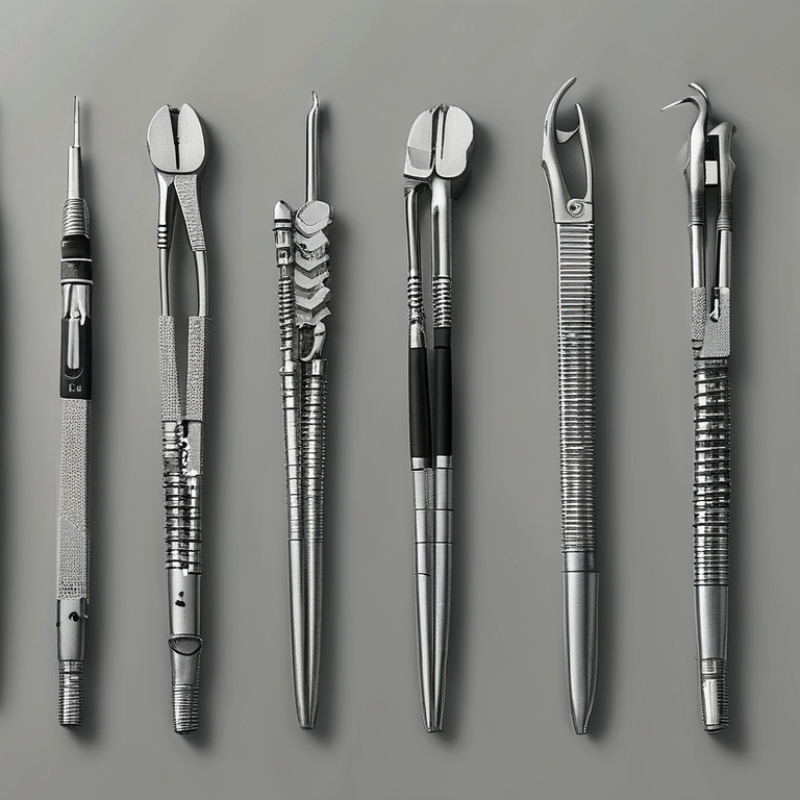
Top 10 Types of Orthopedic Forceps for Global Buyers?

What Orthopedic Forceps Are and How They Support Surgical Procedures

Orthopedic forceps are specialized surgical instruments used to grasp, hold, align, or manipulate bone and surrounding tissue.

Their jaws may be smooth, serrated, curved, angled, or fenestrated. Each design gives the surgeon different control during fracture fixation, joint procedures, and bone preparation.

Common types include reduction forceps, bone-holding forceps, pointed reduction forceps, serrated forceps, atraumatic forceps, rongeur-style forceps, tissue forceps, fragment forceps, plate-holding forceps, and grasping forceps.

The instrument must provide firm control without crushing delicate tissue or damaging a bone fragment. A locking ratchet can maintain pressure while the surgeon works, but excessive force remains a risk.

Good tactile feedback helps identify whether the jaws hold securely or slip under load.

The grip matters.

In a fracture procedure, a narrow jaw may reach between implants, while a broad jaw can stabilize a larger fragment. Curved profiles may improve access around deep anatomical structures.

Global buyers should examine stainless-steel quality, joint movement, jaw alignment, surface finish, and sterilization compatibility.

Cleaning channels deserve attention because retained biological material can compromise reprocessing.

Packaging and traceability also support reliable hospital workflows.

No forceps suits every procedure. Product descriptions sometimes sound precise, yet actual balance and hand feel may differ.

Practical evaluation by qualified surgical staff remains valuable.

Small details matter, especially when instruments are used repeatedly under pressure.

The Main Design Features and Materials of Orthopedic Forceps

Orthopedic forceps vary by task, tissue pressure, and bone size. Common designs include reduction forceps, pointed reduction forceps, bone-holding forceps, serrated grasping forceps, atraumatic forceps, fragment forceps, dressing forceps, dissecting forceps, rongeur-style forceps, and extraction forceps. Each type needs a clear mechanical purpose. Pointed tips help control fracture fragments. Broad serrations improve grip on dense bone. Atraumatic jaws reduce surface damage during handling.

Material selection affects safety and service life. Surgical stainless steel, especially corrosion-resistant grades, offers strength and repeated sterilization performance. Titanium is lighter and may reduce hand fatigue, but it can show more surface wear. Tungsten carbide inserts improve jaw durability and biting control. Silicone or polymer components can protect delicate surfaces, although they require careful compatibility checks. Buyers should request material certificates, passivation details, and sterilization validation.

Small design details matter. A balanced hinge supports precise movement. A smooth box lock reduces trapped residue. Rounded handles improve control inside a wet surgical field. Teeth should align evenly without excessive force. I have found that a highly polished finish can look reassuring, yet appearance proves little. Manufacturing records and inspection data matter more. Some forceps feel excellent during a brief test but become stiff after repeated cycles. This is easy to overlook. Global buyers should compare jaw alignment, tensile strength, corrosion resistance, cleaning access, and documented quality controls before approval. Proper packaging also protects delicate tips during shipment.

Top 10 Types of Orthopedic Forceps for Global Buyers

Representative working lengths and key design applications of commonly used orthopedic forceps.

Working lengths are representative specifications in millimeters; actual dimensions vary by pattern, jaw geometry, and surgical application. Most orthopedic forceps use corrosion-resistant stainless steel, while specialized versions may use titanium or tungsten-carbide inserts for reduced weight or enhanced jaw grip.

Top Ten Types of Orthopedic Forceps and Their Specific Uses

Top Ten Types of Orthopedic Forceps and Their Specific Uses

Orthopedic forceps differ by jaw shape, reach, and holding pressure. Straight bone-holding forceps grasp exposed bone during positioning. Angled bone-holding forceps improve access in deep surgical fields. Serrated forceps provide a firm grip on hard cortical surfaces. Pointed reduction forceps capture fracture fragments with narrow tips. They are useful when a smooth jaw might slip. Pelvic reduction forceps offer longer handles and broader jaws for stabilizing pelvic fractures. Self-centering forceps help align fragments around a central axis. This can reduce repeated adjustments.

Fragment forceps hold small pieces during fixation. Plate-holding forceps temporarily secure a plate against bone before screw placement. Cable-tensioning forceps assist with positioning orthopedic cables around suitable bone sections. Bone-cutting forceps, often designed with strong compound hinges, remove small bone edges or weakened fragments. Use requires restraint. Excessive pressure can crush cancellous bone or damage an implant surface. Experienced teams check jaw alignment, hinge movement, and sterilization compatibility before every procedure. Stainless construction is common, but surface quality still matters. A loose hinge can compromise control. No list is perfect. Some forceps overlap in function, and local surgical technique changes the best choice. Proper training, imaging, and the surgeon’s judgment remain essential.

Top 10 Types of Orthopedic Forceps for Global Buyers? - Top Ten Types of Orthopedic Forceps and Their Specific Uses

No. Forceps Type Typical Design Primary Use Common Orthopedic Applications Key Selection Considerations
1 General Bone-Holding Forceps Strong, curved or straight jaws with serrated or toothed gripping surfaces. Hold and stabilize bone during exposure, drilling, cutting, or fixation. Fracture fixation, osteotomy, bone graft preparation, and temporary fragment control. Jaw profile, opening capacity, locking mechanism, and compatibility with the bone size.
2 Straight Reduction Forceps Straight arms with pointed, serrated, or rounded jaws for direct fragment compression. Bring displaced fracture fragments into alignment and maintain reduction. Long-bone fractures, plate application, screw placement, and temporary reduction. Choose the jaw length and compression force according to fragment size and bone quality.
3 Pointed Reduction Forceps Sharp pointed tips that engage the cortex or small fracture fragments. Achieve precise reduction by penetrating or gripping the outer bone surface. Oblique fractures, metaphyseal fragments, and areas requiring accurate point-to-point control. Tip sharpness, tip alignment, working depth, and risk of cortical damage are important.
4 Curved Reduction Forceps Angled or curved jaws that improve access around soft tissue and bone contours. Reduce and hold fragments when a straight instrument would obstruct the surgical field. Submuscular fracture reduction, periarticular fractures, and minimally invasive approaches. Evaluate curvature, shaft length, jaw offset, and access to the intended anatomical site.
5 Pelvic Reduction Forceps Long handles with deep, curved, or offset jaws designed for broad pelvic surfaces. Reduce and stabilize large pelvic or acetabular fracture fragments. Pelvic ring injuries, acetabular reconstruction, and iliac wing fractures. Jaw reach, pelvic contour, handle leverage, and controlled compression are critical.
6 Verbrugge-Style Bone-Holding Forceps Fenestrated, curved jaws with broad serrated surfaces and a ratcheted handle. Hold larger bone segments securely while leaving part of the surgical field visible. Long-bone fixation, intramedullary procedures, and temporary stabilization during plating. Select the jaw span, fenestration size, locking strength, and surface finish carefully.
7 Lane-Style Bone-Holding Forceps Heavy-duty clamp with broad, roughened or serrated jaws for firm cortical purchase. Grip and stabilize bone during reduction and fixation procedures. Large-fragment fracture surgery, shaft fractures, and orthopedic reconstruction. Confirm adequate jaw strength without excessive compression that could damage bone.
8 Lowman-Style Bone Clamps Self-retaining or ratcheted clamp with broad jaws and controlled closing pressure. Maintain a stable grip on bone while the surgeon performs fixation or alignment. Fracture reduction, bone graft handling, and stabilization of larger fragments. Look for smooth ratchet action, secure locking, atraumatic jaw geometry, and suitable reach.
9 Cerclage Wire-Passing Forceps Long, curved, slim profile designed to pass around the circumference of a bone. Guide cerclage wire or cable around bone while helping protect surrounding soft tissue. Periprosthetic fractures, femoral fractures, trochanteric fixation, and supplemental fixation. Check curve direction, shaft length, tip smoothness, cable clearance, and tissue protection.
10 Sequestrum Forceps Long, narrow jaws, often fenestrated or angled, for grasping loose bone fragments. Remove nonviable, loose, or separated bone from a deep surgical site. Sequestrectomy, chronic osteomyelitis procedures, debridement, and removal of small bone fragments. Jaw delicacy, tip visibility, working length, corrosion resistance, and precise control are essential.

Note: Instrument selection should be based on the patient’s anatomy, fracture pattern, surgical approach, required grip strength, and the applicable medical-device regulations.

How Global Buyers Can Compare Quality, Safety, and Surgical Performance

Top 10 Types of Orthopedic Forceps for Global Buyers

Global buyers often compare ten designs: bone-holding, reduction, fragment, grasping, pointed, serrated, fenestrated, atraumatic, self-retaining, and compression forceps. Each design should match a defined surgical task. A reduction forceps needs stable jaw alignment during fracture positioning. A fenestrated pattern may improve visibility around delicate tissue. The correct shape matters more than a broad product catalog.

Quality begins with material records, machining accuracy, and surface inspection. Medical-grade stainless steel should resist corrosion after repeated cleaning cycles. Check the hinge for smooth movement and unwanted lateral play. The ratchet should lock firmly without forcing the surgeon’s hand. A polished finish can mislead. It does not prove reliable performance. Ask for dimensional reports, batch traceability, and validated sterilization instructions. Independent testing adds credibility.

Safety and surgical performance require practical evaluation. Examine jaw contact under load, grip consistency with wet gloves, and access within a narrow operative field. Serrations should hold bone without excessive crushing. Sharp edges around the handle deserve rejection. Clinical engineers and experienced surgeons should review trial samples together. Their feedback can reveal problems that factory photographs hide. Some buyers focus heavily on price, and that is understandable. Still, a cheaper instrument may create replacement costs, delays, or handling concerns. No test replaces careful observation in the operating room.

Key Purchasing Factors for Hospitals, Distributors, and Medical Suppliers

Top 10 Types of Orthopedic Forceps for Global Buyers

Hospitals and distributors should evaluate orthopedic forceps by procedure, tissue contact, and sterilization workflow. Common types include bone-holding, reduction, grasping, drilling, cutting, rongeur, clamp, dressing, extraction, and wire-handling forceps. Each design solves a different surgical task.

A heavy bone-holding forceps should not replace a delicate grasping model.

Material selection affects safety and service life. Medical-grade stainless steel should resist corrosion after repeated steam sterilization.

Inspect the joint, serrations, locking mechanism, and alignment under bright light. A loose hinge can reduce control during a demanding procedure. It can also increase staff frustration.

Small details matter.

Purchasing teams should compare jaw shape, working length, handle comfort, surface finish, and package traceability. Ask for documented material specifications, quality records, and sterilization compatibility.

Suppliers should also confirm inspection methods and replacement support. In our experience, sample testing exposes problems that product photos hide.

A clamp may feel balanced at first, yet become tiring after repeated use.

Price alone misleads. However, premium specifications do not guarantee better results in every operating room.

Review local equipment, surgeon preference, training levels, and expected case volume before selecting quantities. Some assumptions deserve another look.

FAQS

: What are orthopedic forceps used for?

: They hold, align, compress, or remove bone and related surgical materials. Each design serves a specific task.

When should straight bone-holding forceps be selected?

Use them when exposed bone needs stable positioning in a relatively open surgical field. They provide direct access.

Why choose angled forceps?

Angled jaws can reach deeper surgical areas. They may improve access when straight handles obstruct the view.

What advantage do pointed reduction forceps provide?

Narrow tips can capture fracture fragments securely. They help when smooth jaws might slip from uneven bone surfaces.

How do serrated jaws affect surgical control?

Serrations improve grip on hard cortical bone. Excessive pressure may still crush softer cancellous bone.

What should buyers inspect before purchasing forceps?

Check jaw alignment, hinge movement, ratchet locking, surface quality, and handle comfort. Look closely under bright light.

How can hospitals compare forceps quality?

Request material records, dimensional reports, batch traceability, and sterilization instructions. Trial samples reveal problems photographs often hide.

Are polished surfaces proof of reliable performance?

No. A polished finish looks reassuring, but it does not confirm strength, alignment, or long-term control.

What role does sterilization compatibility play?

Forceps should tolerate repeated cleaning and steam sterilization without corrosion or weakened joints. Compatibility must be documented.

Does the lowest price offer the best value?

Not always. A cheaper instrument may create fatigue, replacement costs, delays, or handling concerns. Price deserves a second look.

Conclusion

This article provides a practical overview of Orthopedic Forceps and their essential role in surgical procedures involving bones, joints, and soft tissue. It explains how these instruments assist with grasping, holding, manipulating, and positioning tissue or small orthopedic components with controlled precision. Readers will learn about important design features, including jaw shape, locking mechanisms, handle ergonomics, surface finish, and the use of durable, sterilization-resistant materials. The article also introduces ten common types of orthopedic forceps and describes their specific applications in different surgical situations.

For global buyers, the guide outlines how to compare instrument quality, safety, durability, and surgical performance through factors such as manufacturing consistency, grip control, jaw alignment, corrosion resistance, and ease of cleaning. It also highlights key purchasing considerations for hospitals, distributors, and medical suppliers, including intended use, surgeon preferences, sterilization requirements, regulatory documentation, supply reliability, and total ownership cost.

Sophia

Sophia

Sophia is a dedicated marketing professional with an exceptional depth of knowledge about her company's products and services. With a keen understanding of market trends and customer needs, she crafts insightful blog posts that not only inform but also engage readers, enriching the company’s online......